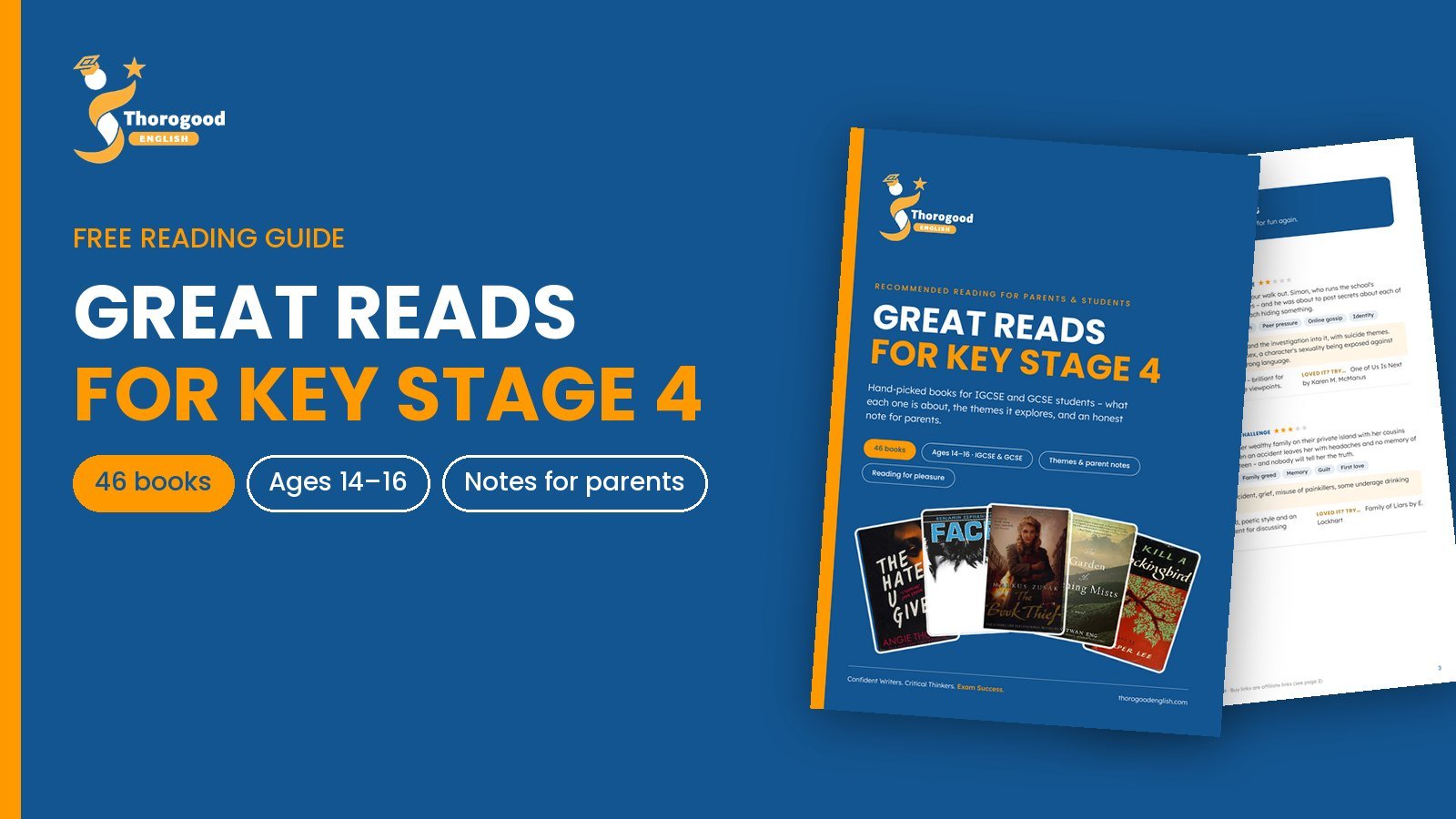
Many GCSE and IGCSE students read what they have to for school – and very little else. Yet the students who do best in English are very often the ones who read widely for pleasure. So I’ve put together a free guide to 46 books that older teenagers genuinely enjoy, with a frank note for parents on every one.
Why wide reading matters at 14–16
At this stage, English exams are full of texts students have never seen before. Regular readers meet those texts with confidence: they have the vocabulary, they’ve seen how writers build tension and argue a case, and they have a store of ideas to draw on in their own writing. (I explain the research in Why Reading Fiction Improves Exam Performance in English.) None of that can be crammed the night before – but twenty minutes of reading a day builds it steadily.
Six books to start with
- Face by Benjamin Zephaniah – a popular boy’s face is scarred in a crash, and he has to find out who he really is.
- One of Us Is Lying by Karen M. McManus – five students walk into detention and only four walk out: a twisty thriller for 14+ (do read the parent note).
- The Hate U Give by Angie Thomas – a powerful novel about racism, police violence and finding your voice.
- The Garden of Evening Mists by Tan Twan Eng – a beautifully written novel set in the Cameron Highlands in 1950s Malaya (Upper KS4, for mature readers of 15+).
- Of Mice and Men by John Steinbeck – a short classic about friendship, loneliness and dreams.
- Into Thin Air by Jon Krakauer – the gripping true story of a disaster on Mount Everest.
Honest notes for parents
Books written for this age deal honestly with difficult subjects – that’s part of their power. So every book in the guide has a clear note on anything sensitive, and books for mature readers of 15+ are marked “Upper KS4”. My advice: read the note, then talk to your teenager about what they choose. These books make wonderful conversation starters.
Tips for busy teenagers
- Mix modern and classic. A thriller one week, a classic the next – both build different skills.
- Non-fiction counts. Memoirs and real-life stories are brilliant preparation for non-fiction reading and writing.
- Audiobooks help. Listening on the way to school still builds vocabulary and a feel for good writing.
- Little and often. Twenty minutes a day beats a whole weekend once a term.
Download the free guide
Great Reads for Key Stage 4 is a 22-page PDF with six sections – Thrillers & Page-Turners, Growing Up (friendships, bullying, identity and mental health), Big Issues, Asian Voices, Classics and True Stories – plus a “Find a book by topic” index covering everything from bullying and body image to mental health and online life.
UK families can buy any book directly from the guide through Bookshop.org, which supports independent bookshops. Families abroad will find these books in most good bookshops – in Malaysia, try Kinokuniya, MPH, Popular or BookXcess – and in school libraries.
If your teenager is working towards IGCSE or GCSE English and would like expert support, take a look at my small live classes and my 2027-ready revision resources. Younger children too? There’s a Great Reads for Key Stage 3 guide as well.