Short Answers: Every Mark Counts, Full Unit — Paper 1 Question 1 and 3(a)–(c) — IGCSE First Language English
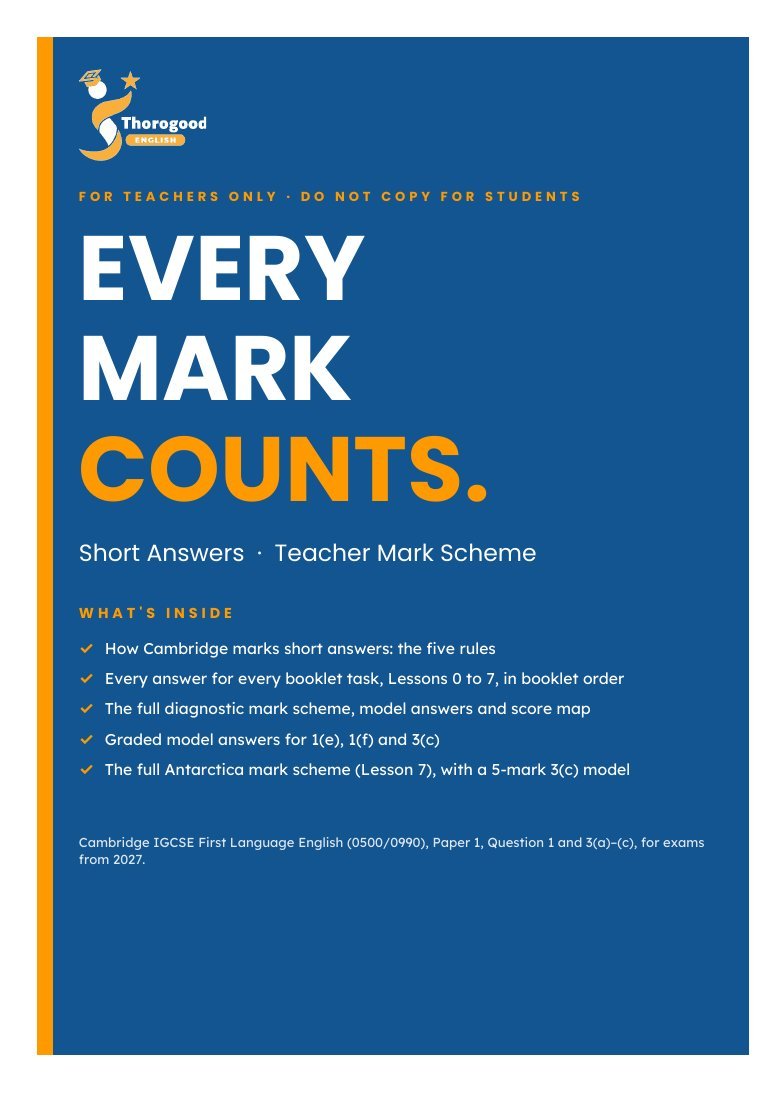
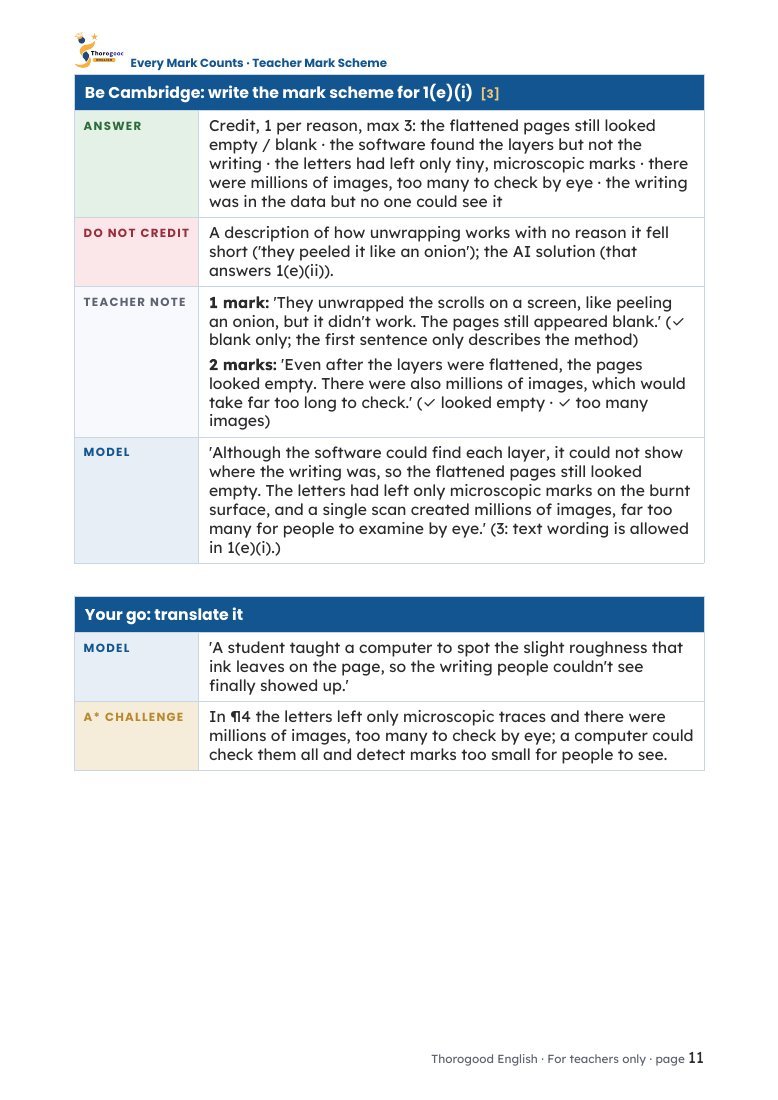
Look insideUse the arrows or thumbnails to see real pages from this resource.









Description
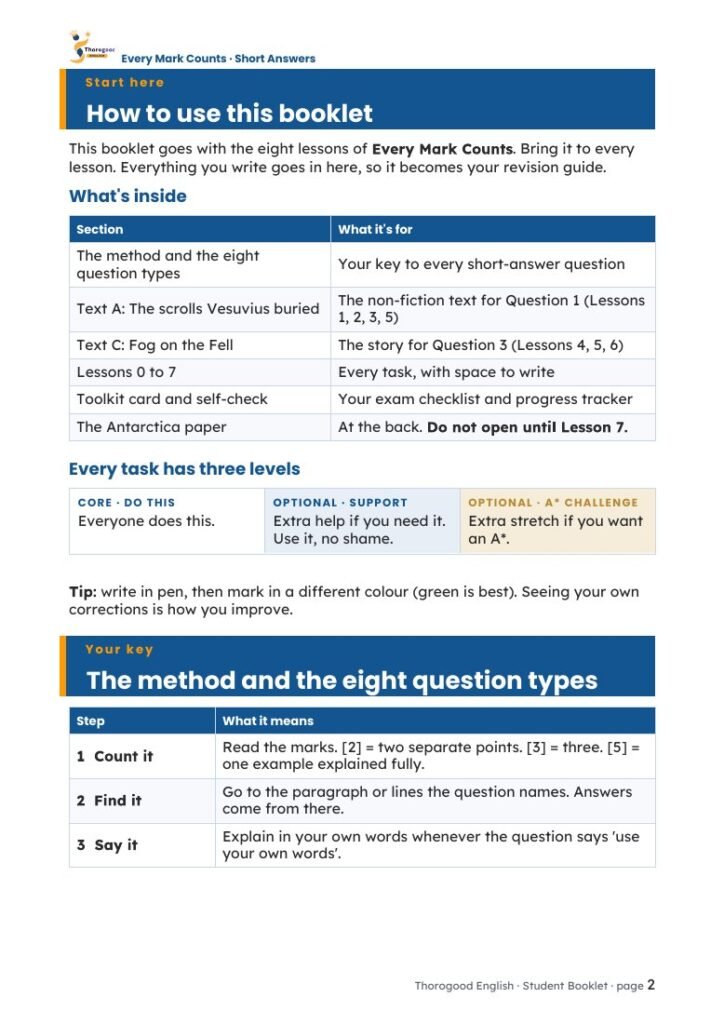
Helps with: answering short reading questions accurately and in your own words, so easy marks aren’t lost.
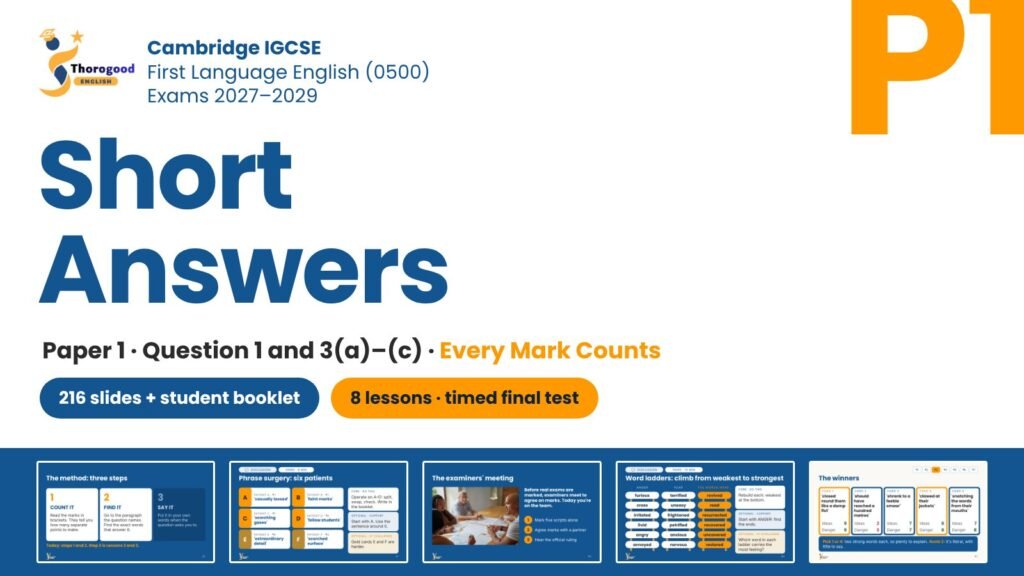
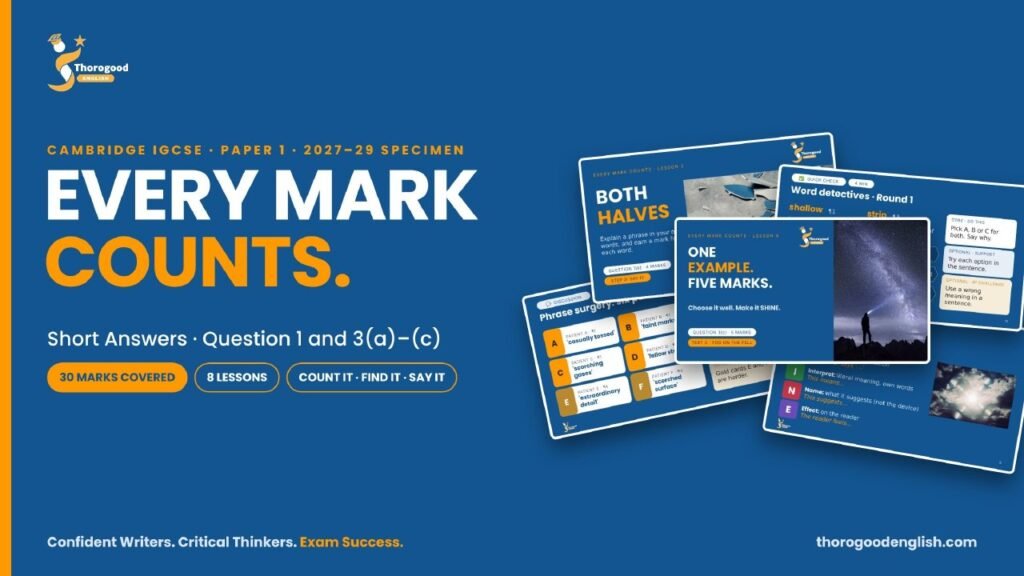
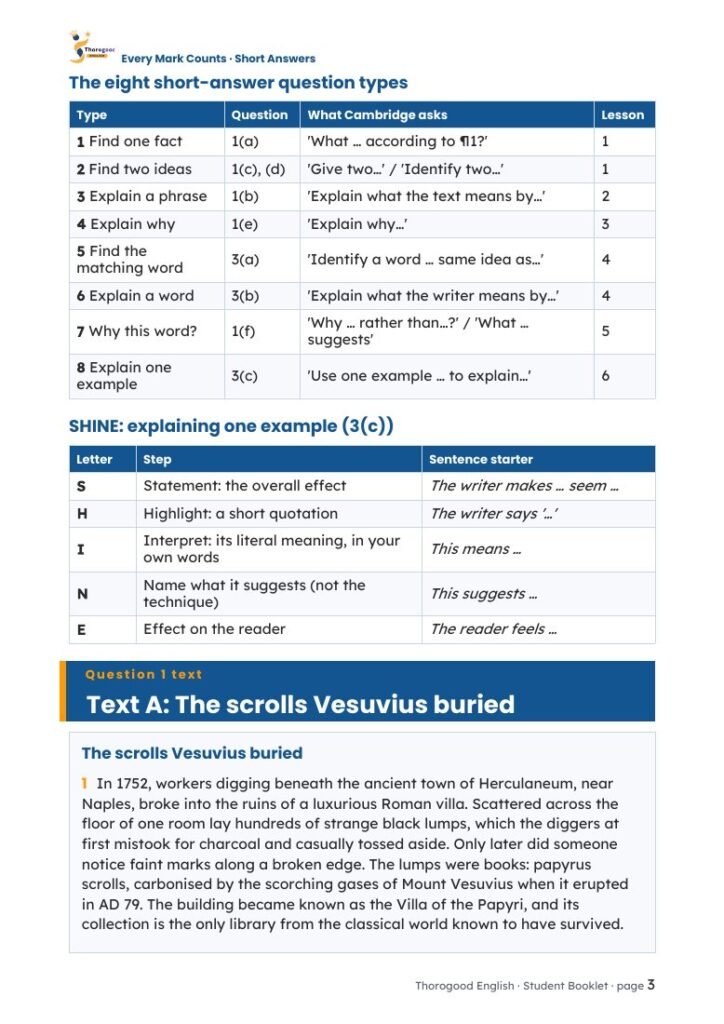
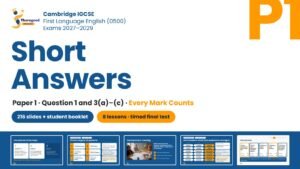
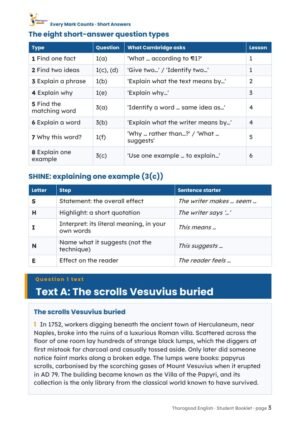
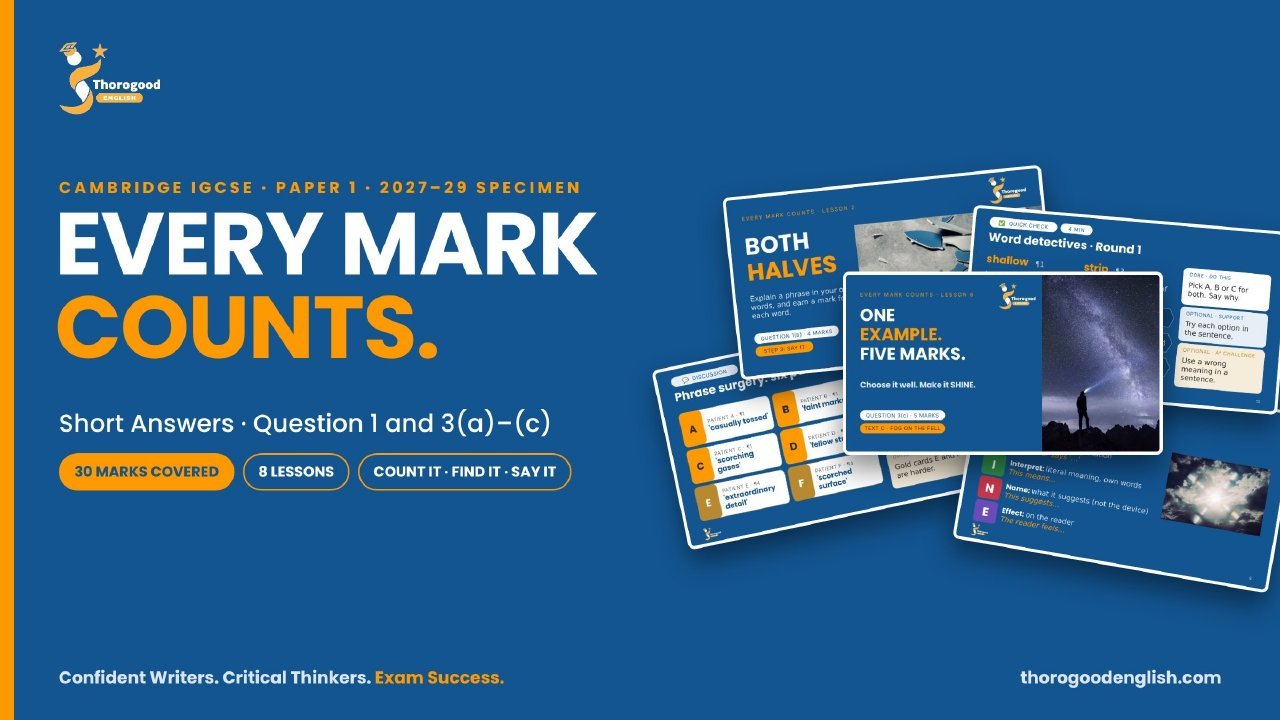
The complete Short Answers unit for Cambridge IGCSE First Language English (0500), Paper 1 Question 1 and Question 3(a)–(c), written for the 2027–2029 specification. It covers every short-answer question on the paper: all eight question types, worth 30 of the 80 marks.
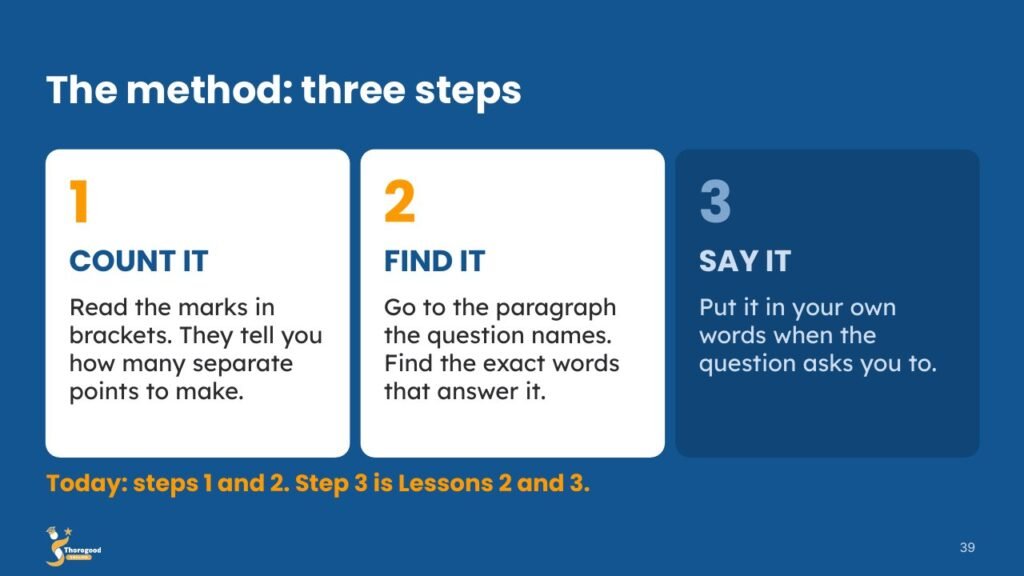
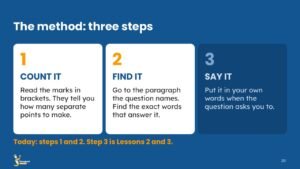
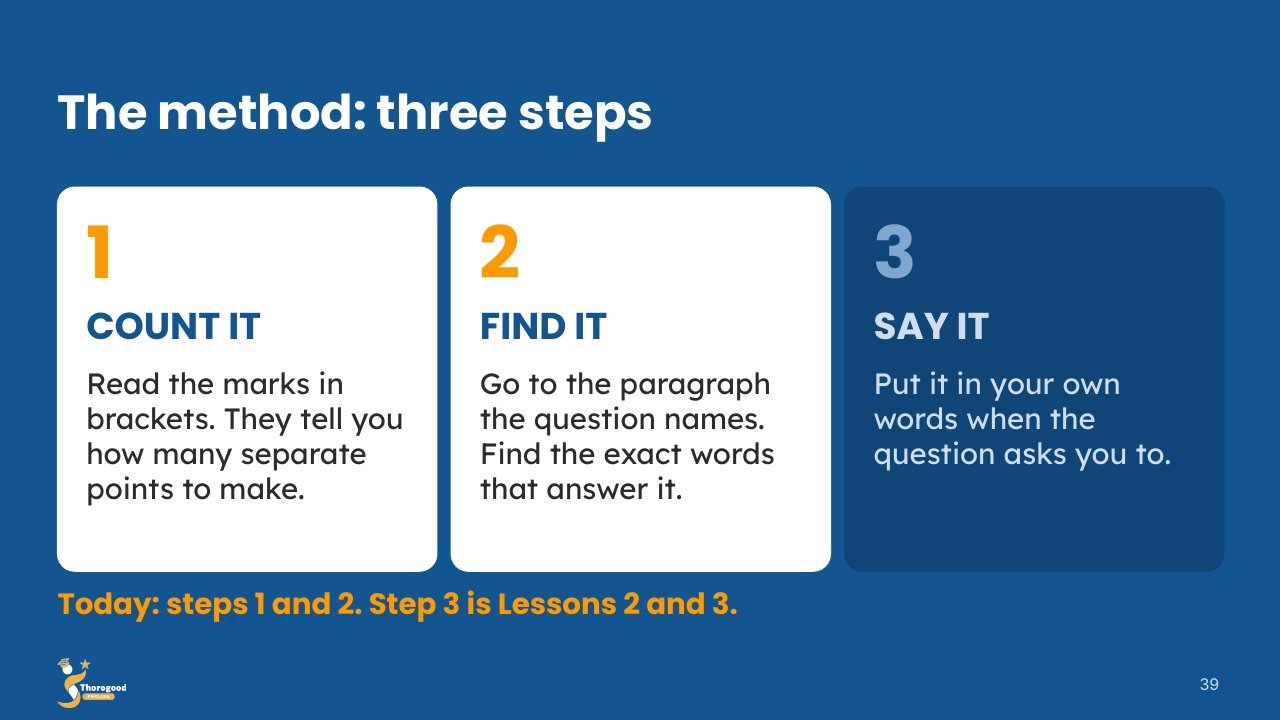
Short answers look like the easy marks, yet they are where most students quietly lose a grade: copying when the question says “own words”, explaining half a phrase, giving one idea twice, or naming a technique and stopping. This unit finds exactly where each student’s marks are going, then fixes every leak with one simple method they can use on any question: Count it · Find it · Say it.
- 8complete lessons
- 216teaching slides
- 8question types
- 45booklet pages
Not sure yet?
Try the first lesson free. Short Answers: Where Are Your Marks Going? is the unit’s diagnostic lesson: a 25-minute mini paper with one question of every type, marked together, so each student leaves with a personal map of the lessons they need. Get the free lesson →
What’s included?
- Editable PowerPoint with eight complete 75-minute lessons: 216 teaching slides, with every text on screen for reading aloud or sharing online.
- Detailed speaker notes on every slide: the purpose of each task, timings, what to say, the answers to expect, what to watch for, and an online tip for teaching over Google Meet.
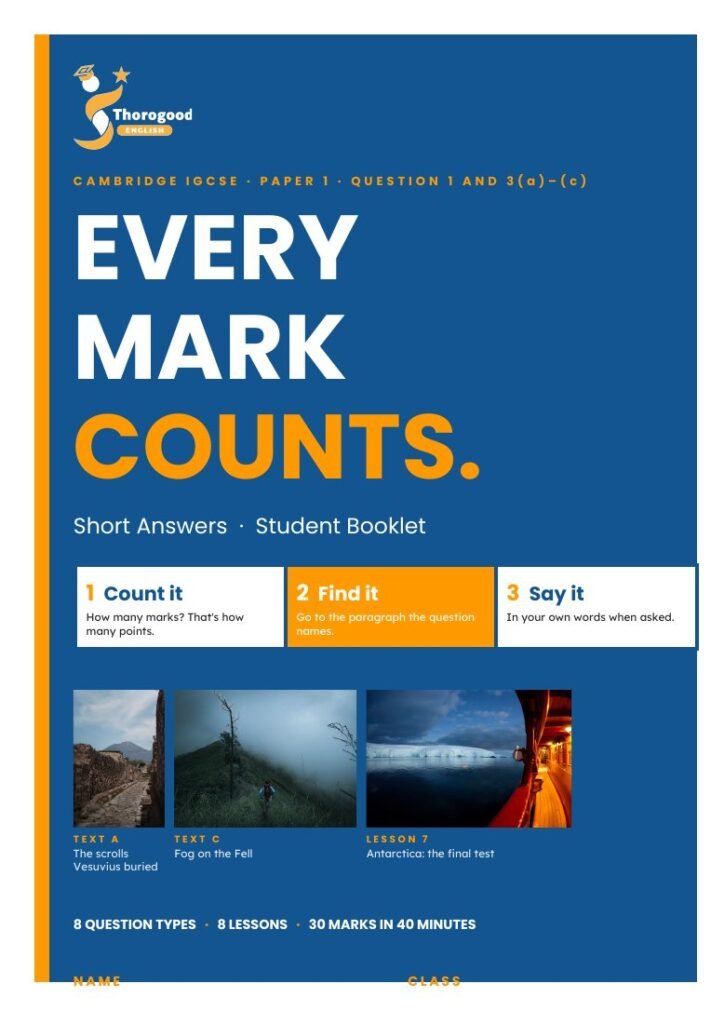
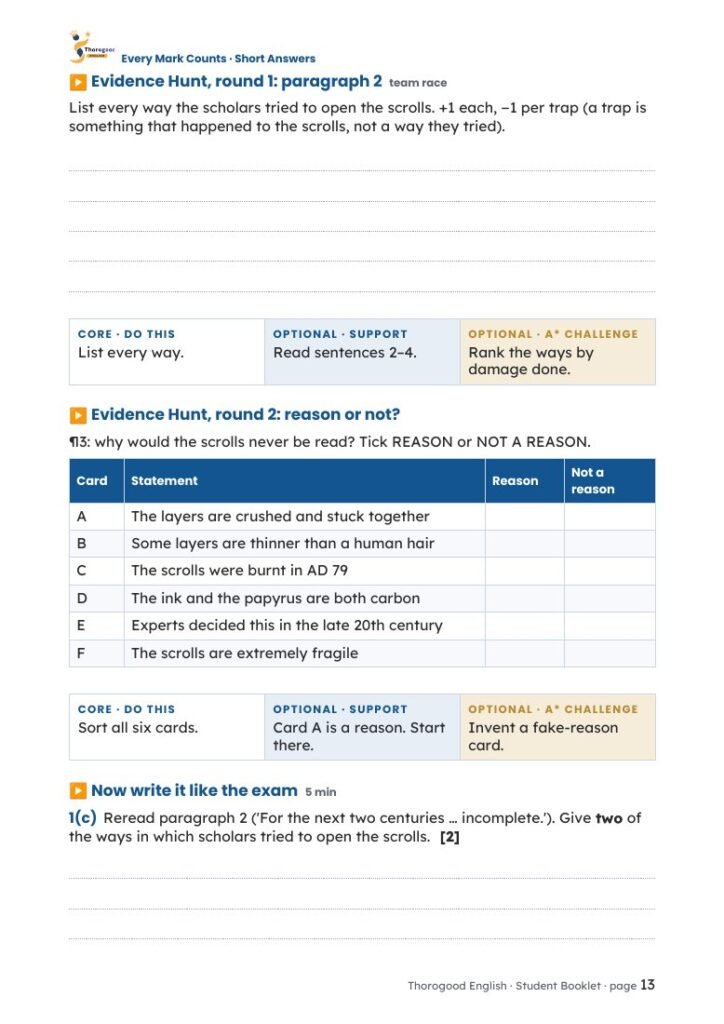
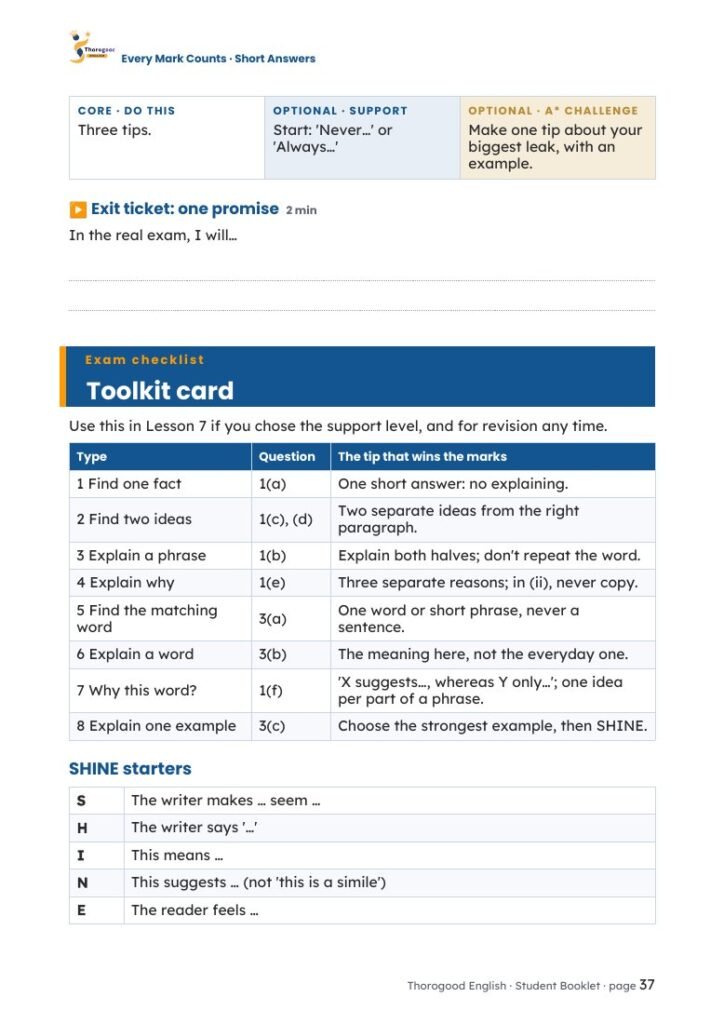
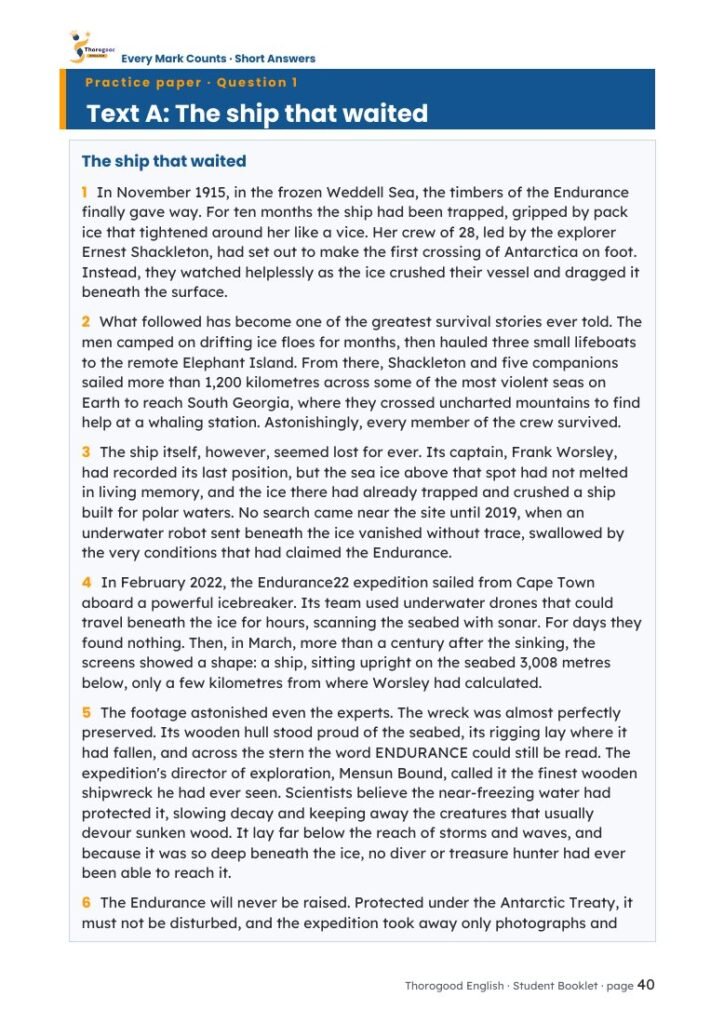
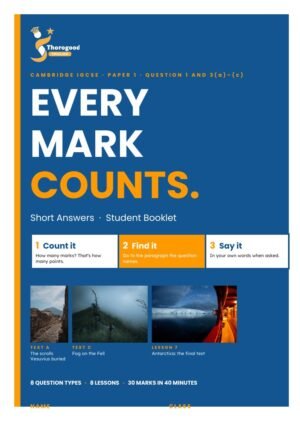
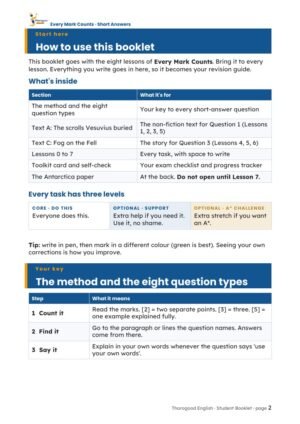
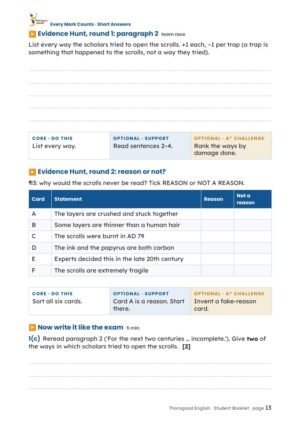
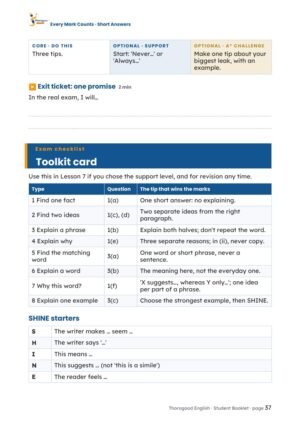
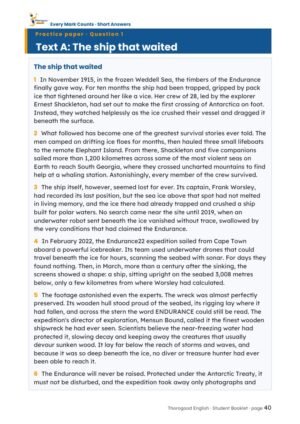
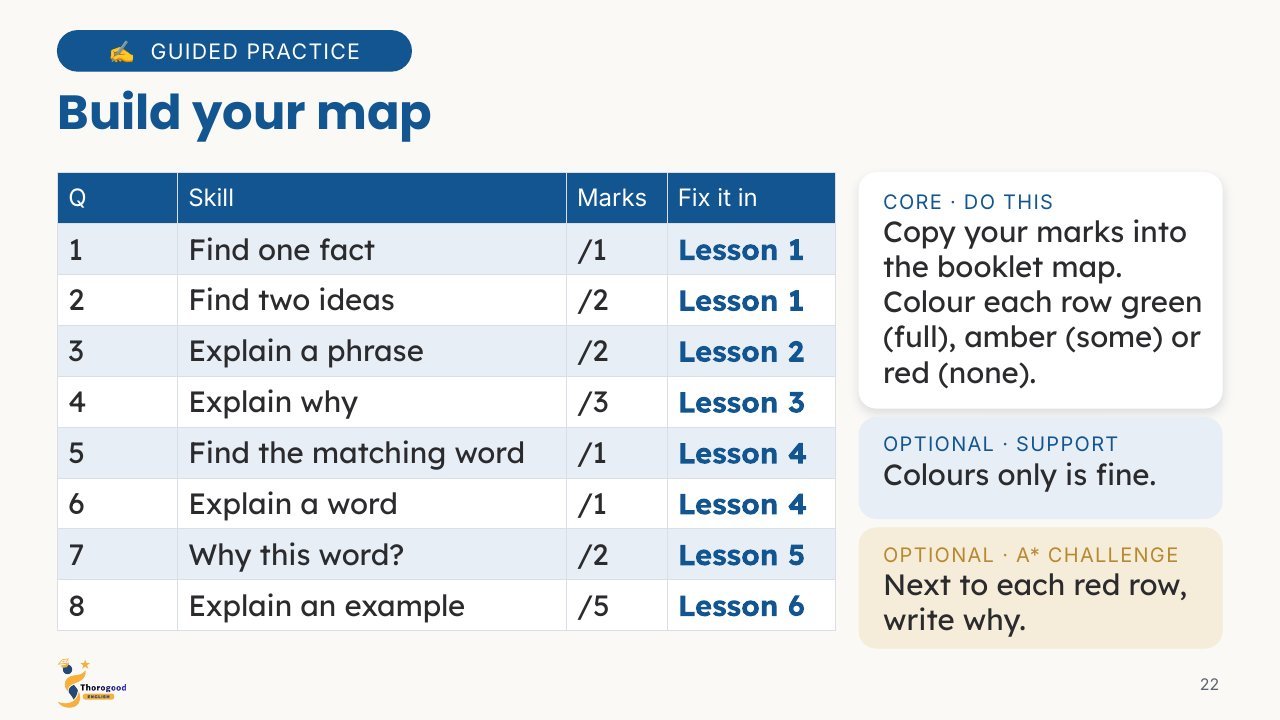
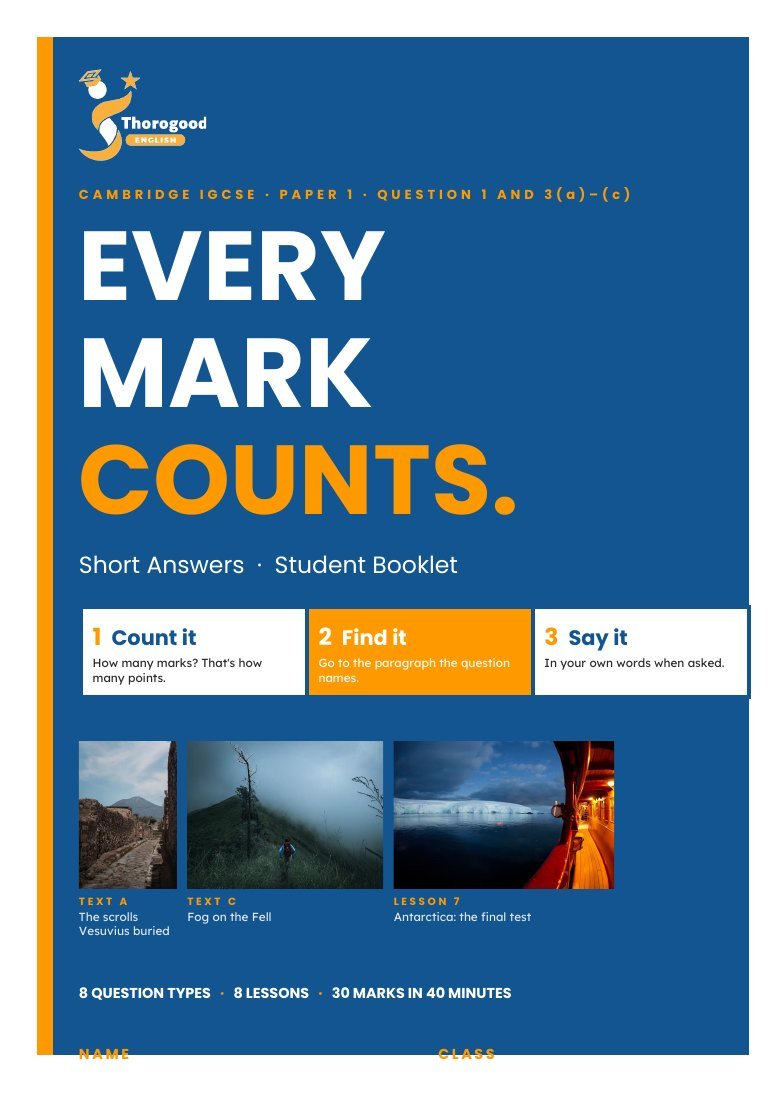
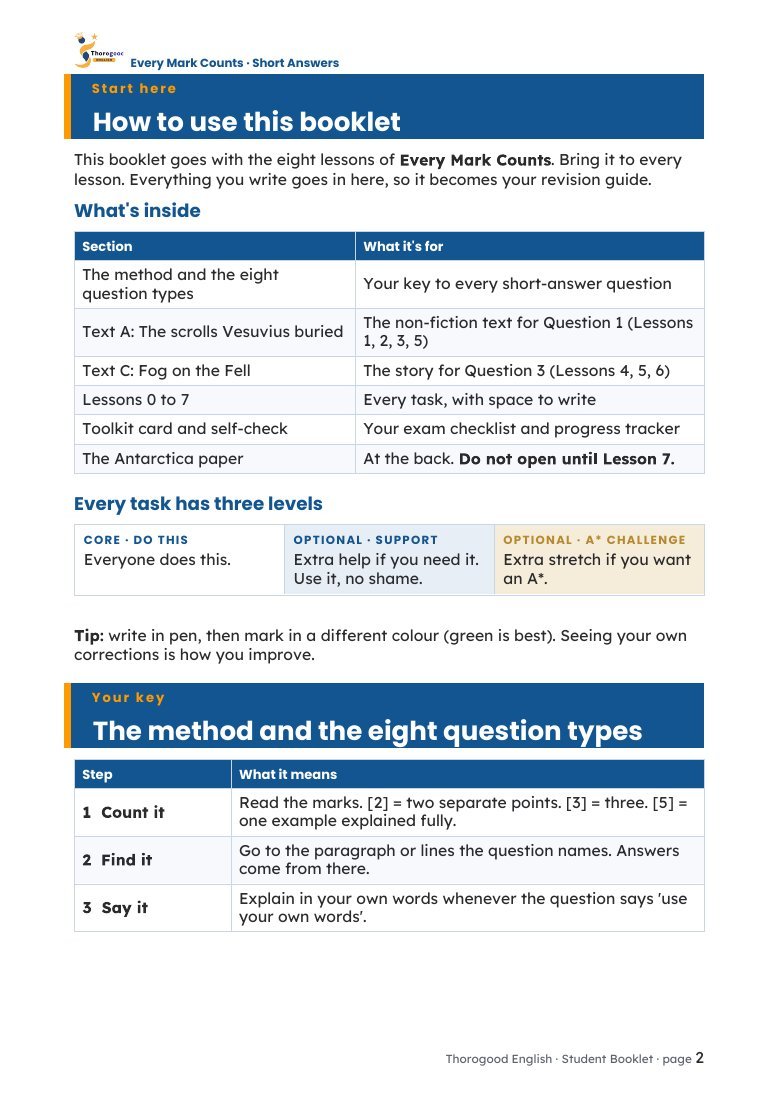
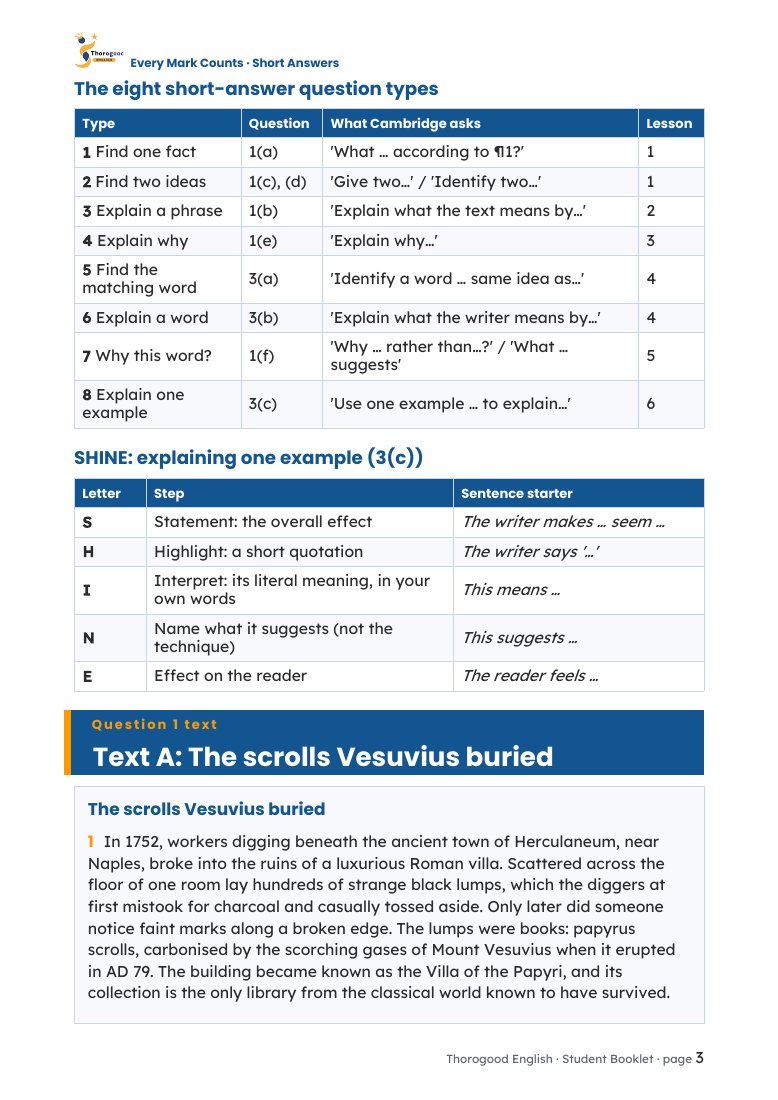
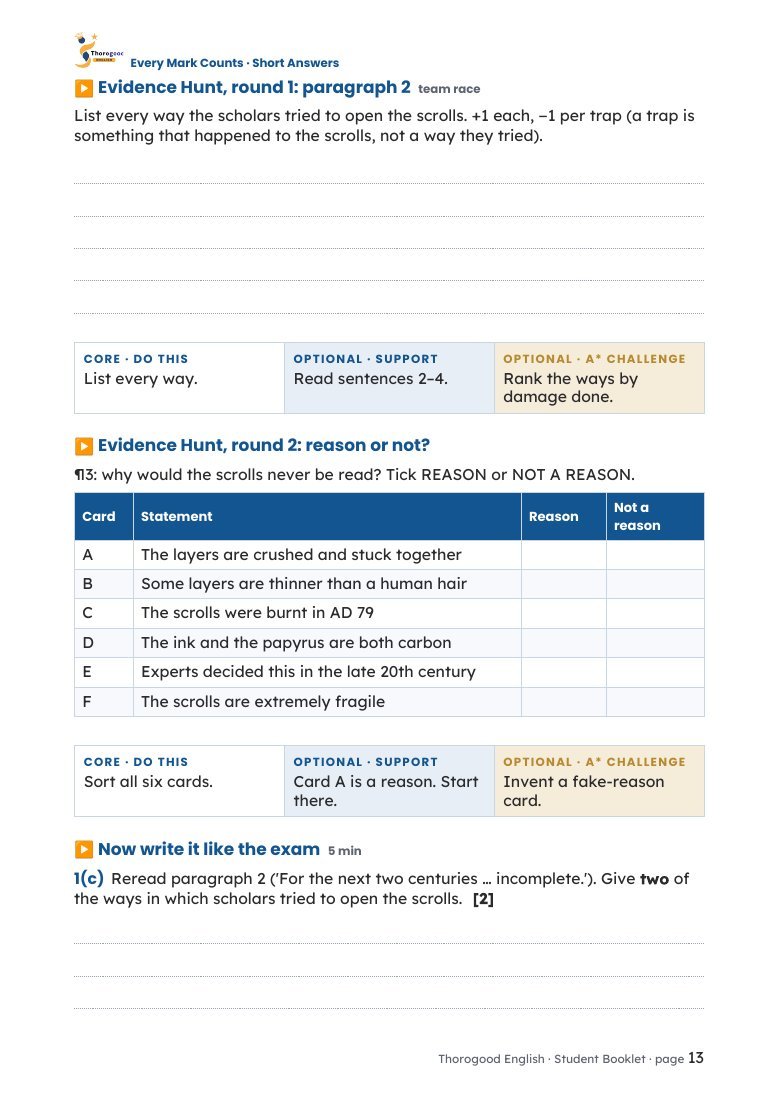
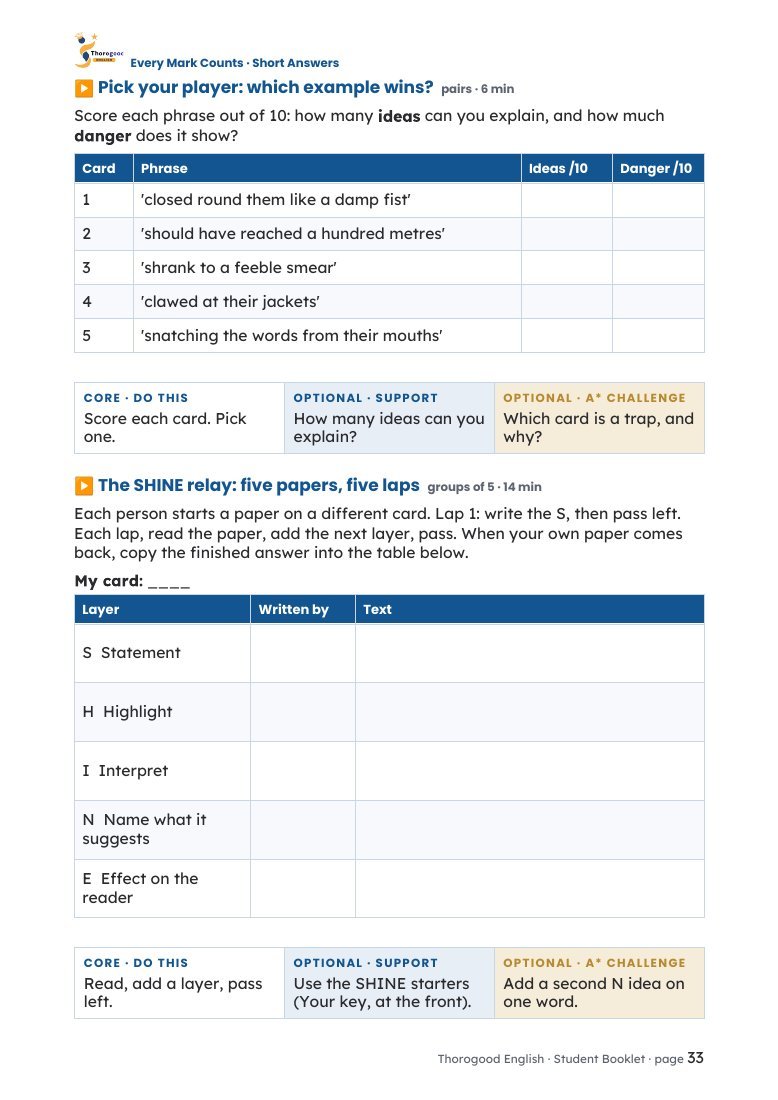
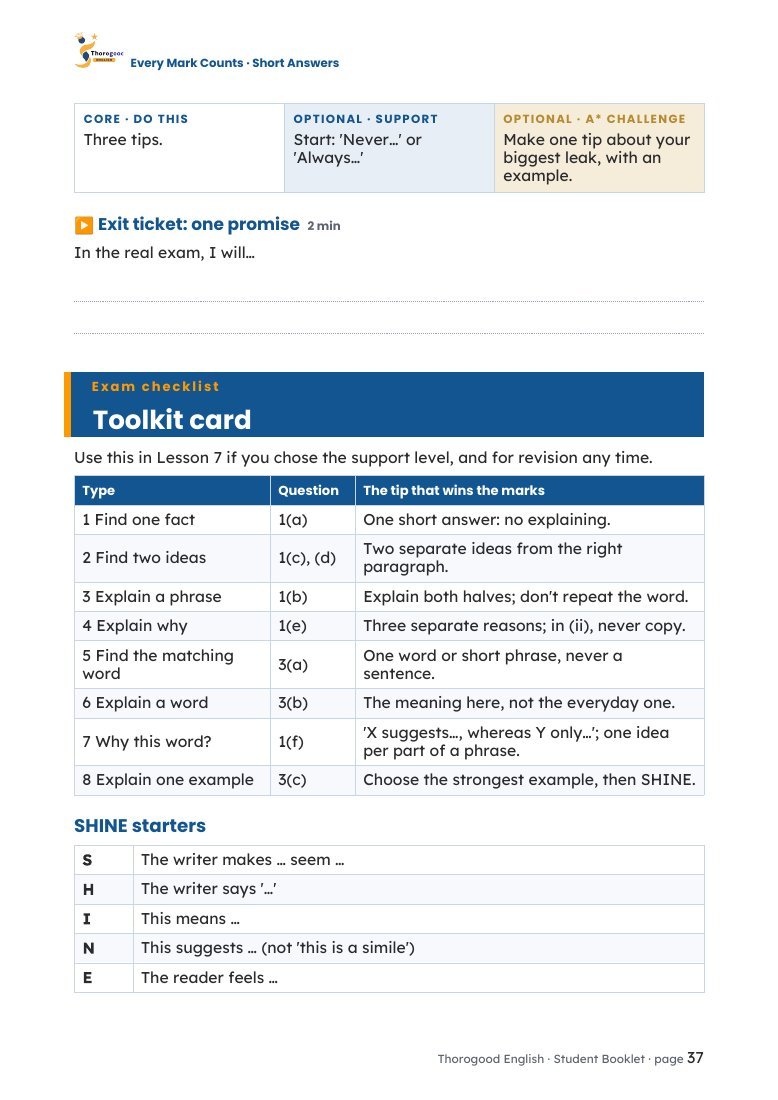
- Student booklet (45 pages, Word and PDF): every text, a glossary for each one, a space for every task in lesson order, a toolkit card, a self-check tracker and the final test paper at the back. Students keep it as their revision guide.
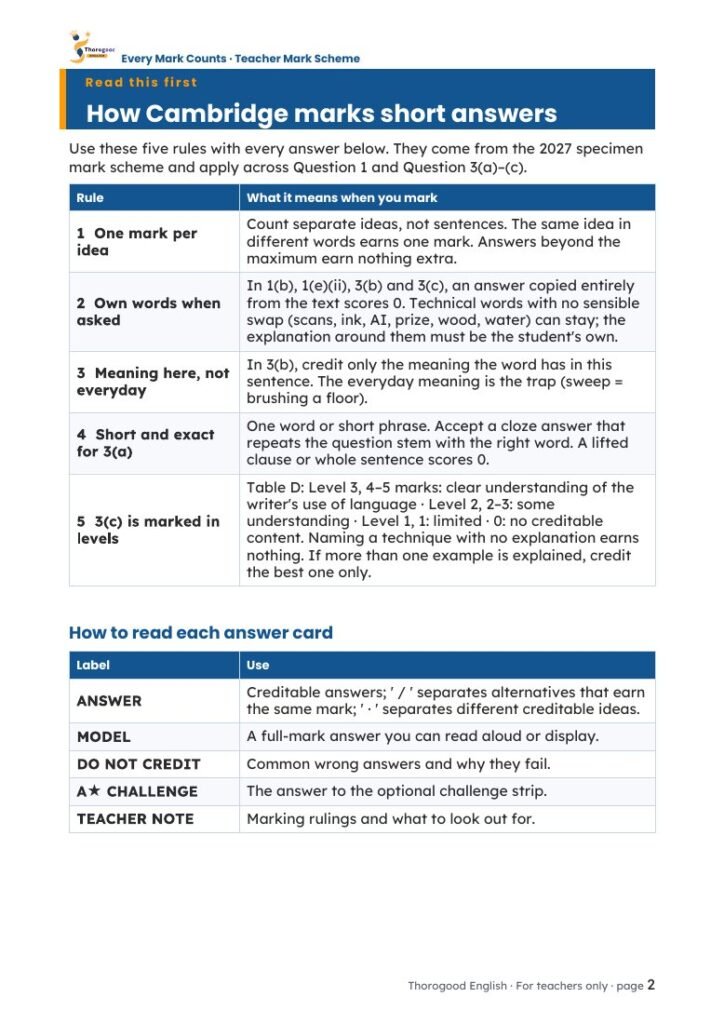
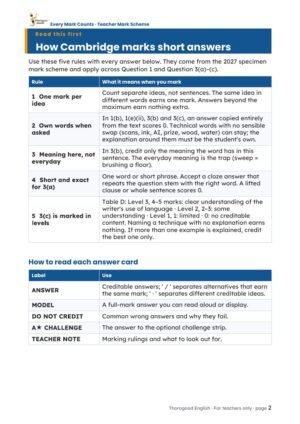
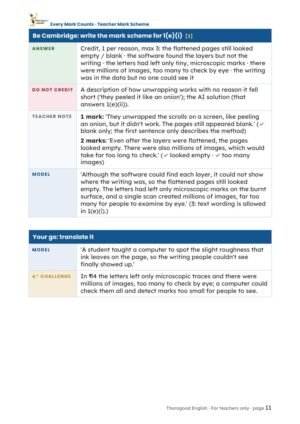
- Teacher mark scheme (24 pages, Word and PDF, teacher only): the five rules Cambridge uses to mark short answers, then every answer to every booklet task from Lesson 0 to Lesson 7, with what to accept, what not to credit and why, model answers, marking rulings and the answers to every A* challenge.
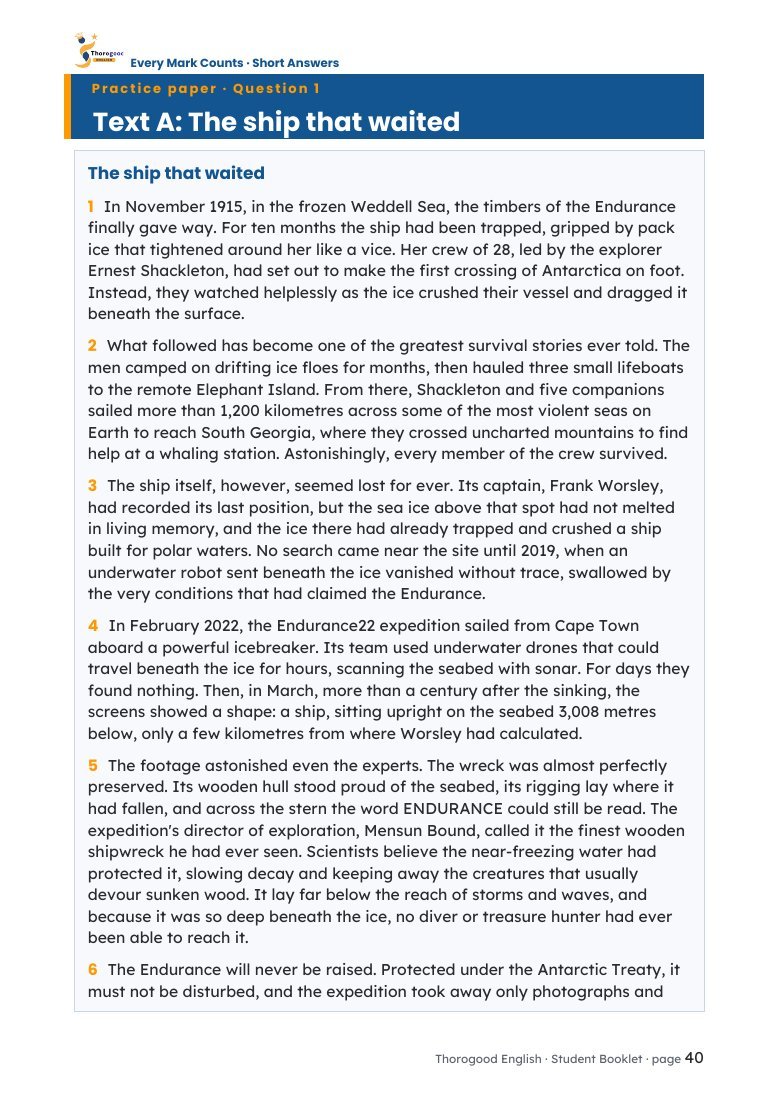
- Four original texts written for the unit, pitched at coursebook level with challenging vocabulary while the questions stay clear and simple: “The scrolls Vesuvius buried” (how artificial intelligence is reading burnt Roman scrolls), “Fog on the Fell” (a trainee’s first night with a mountain rescue team), and, for the final test, “The ship that waited” (the discovery of Shackleton’s Endurance) and “Into the white” (a teenager’s first voyage to Antarctica).
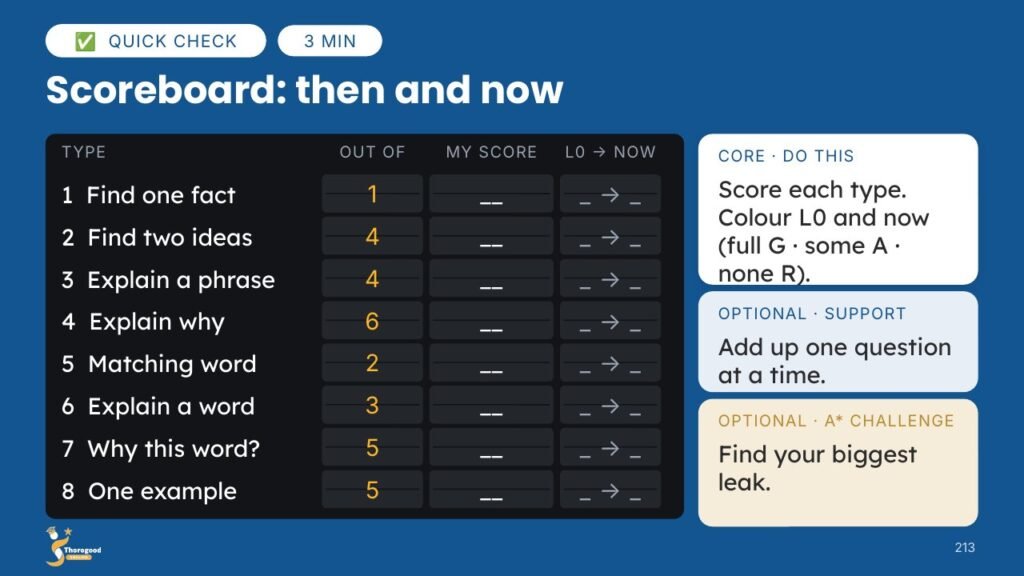
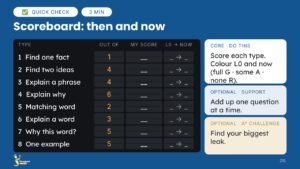
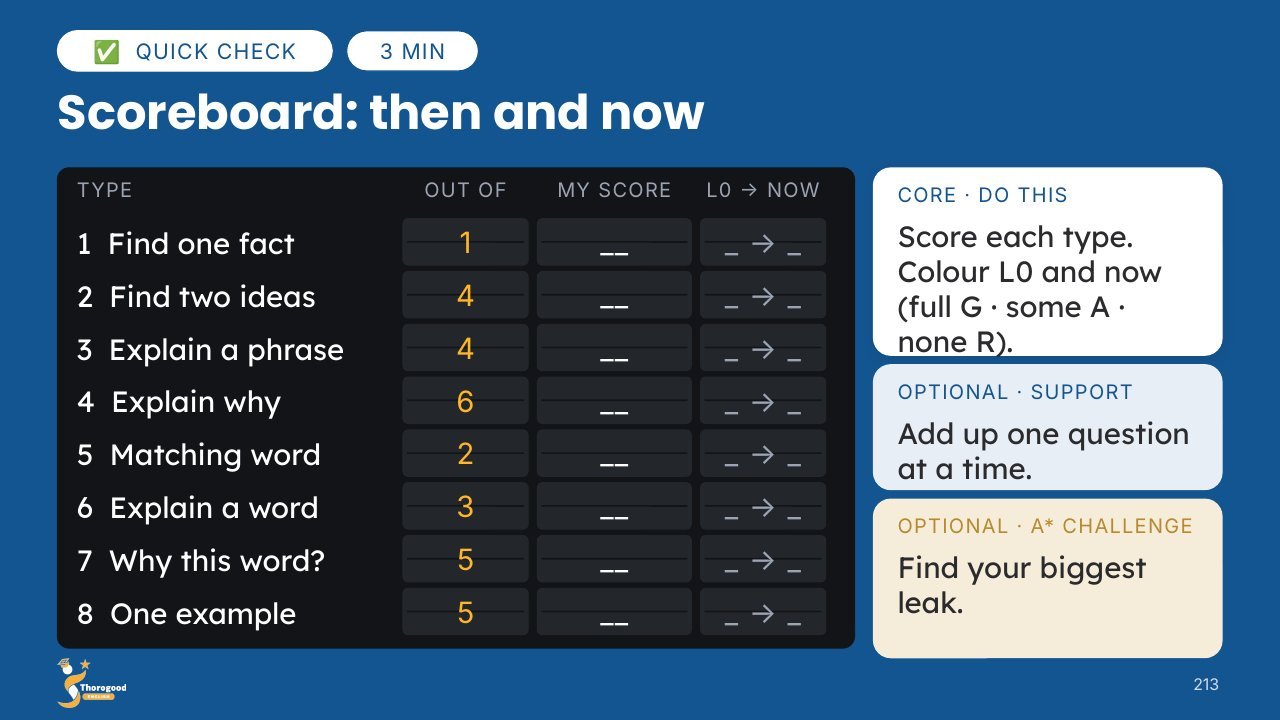
- A full timed final test in the 2027 layout: Question 1 and Question 3(a)–(c), 30 marks in 40 minutes on unseen texts, with a complete mark scheme, a five-mark model answer and a “then and now” scoreboard so students can see how far they have come.
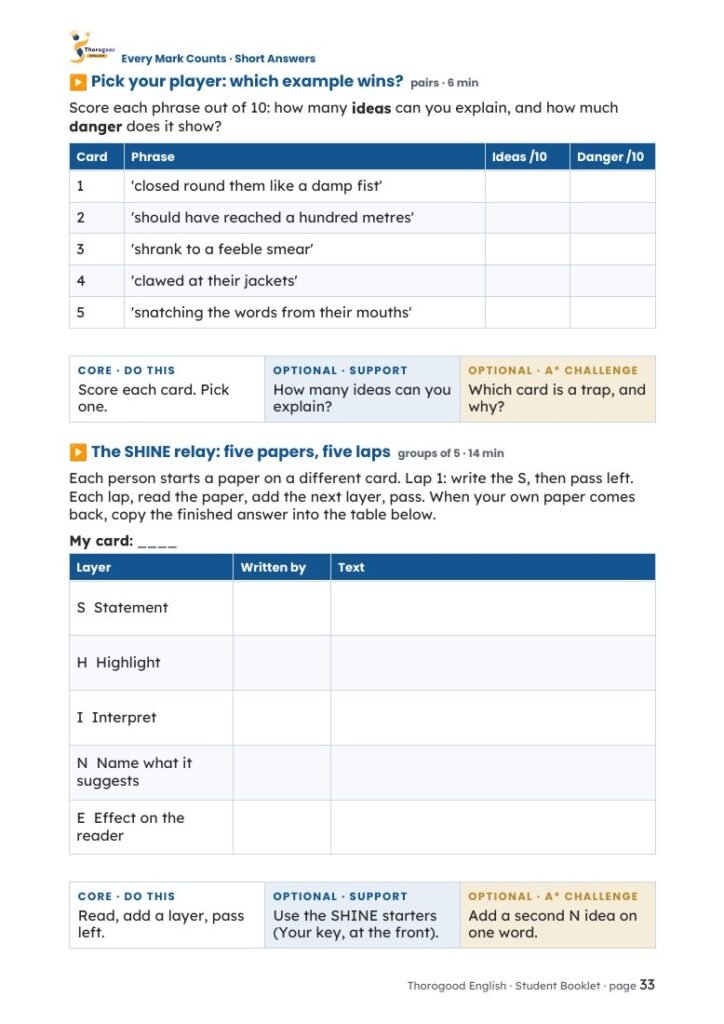
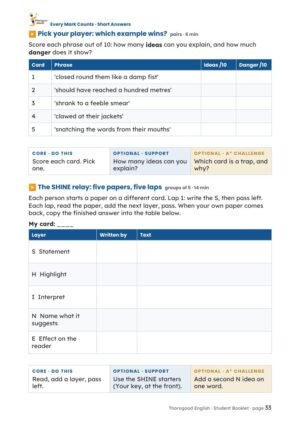
- One method that runs through every lesson: Count it · Find it · Say it, plus SHINE for building a five-mark 3(c) answer one layer at a time.
- Every task clearly marked Core, with an Optional Support hint for students who need a way in and an Optional A* Challenge for those aiming for the top grades.
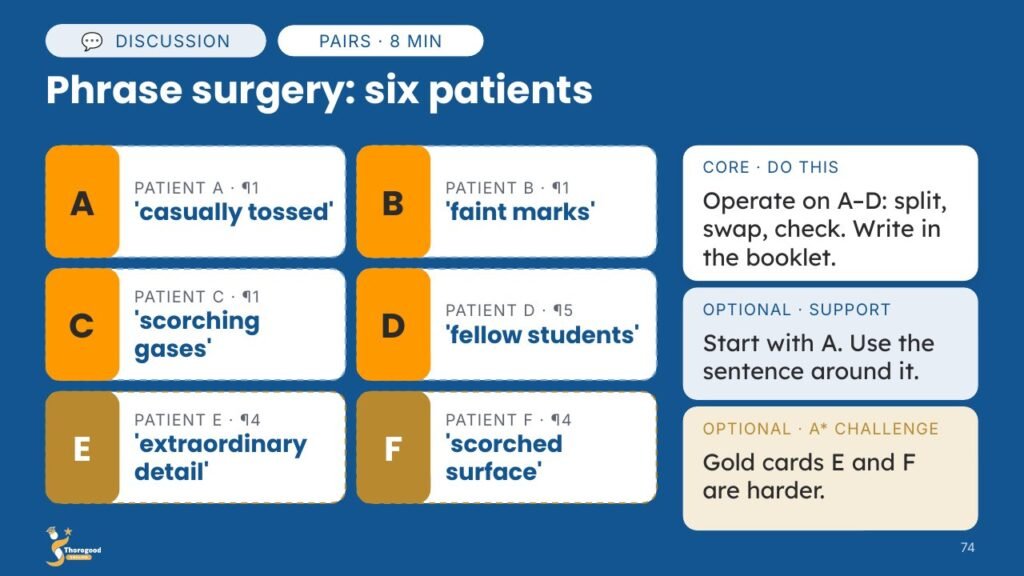
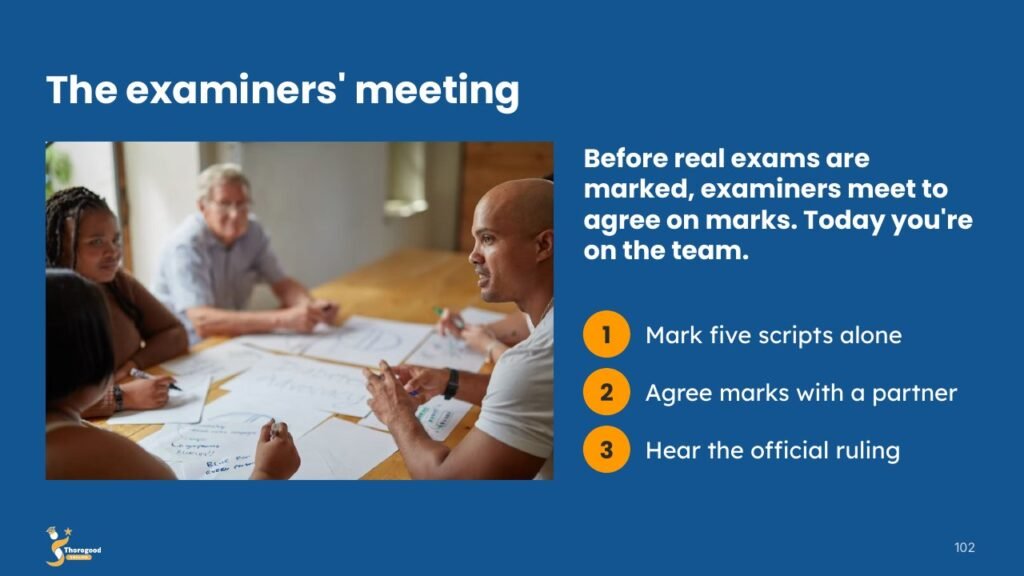
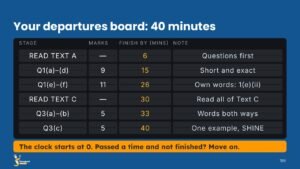
- Lessons that never feel the same twice: a team evidence hunt, phrase surgery, an examiners’ meeting, word detectives, word ladders, a film director’s shot plan, a SHINE relay and a departures board for the final test.
What are the lessons?
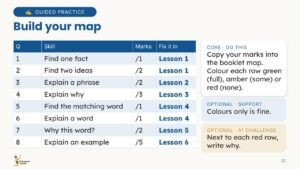
- Where Are Your Marks Going? A 25-minute diagnostic with one question of every type, marked together, so each student builds a red, amber and green map of the lessons they need most
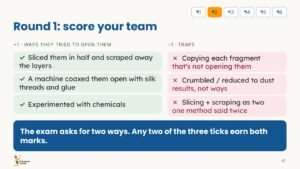
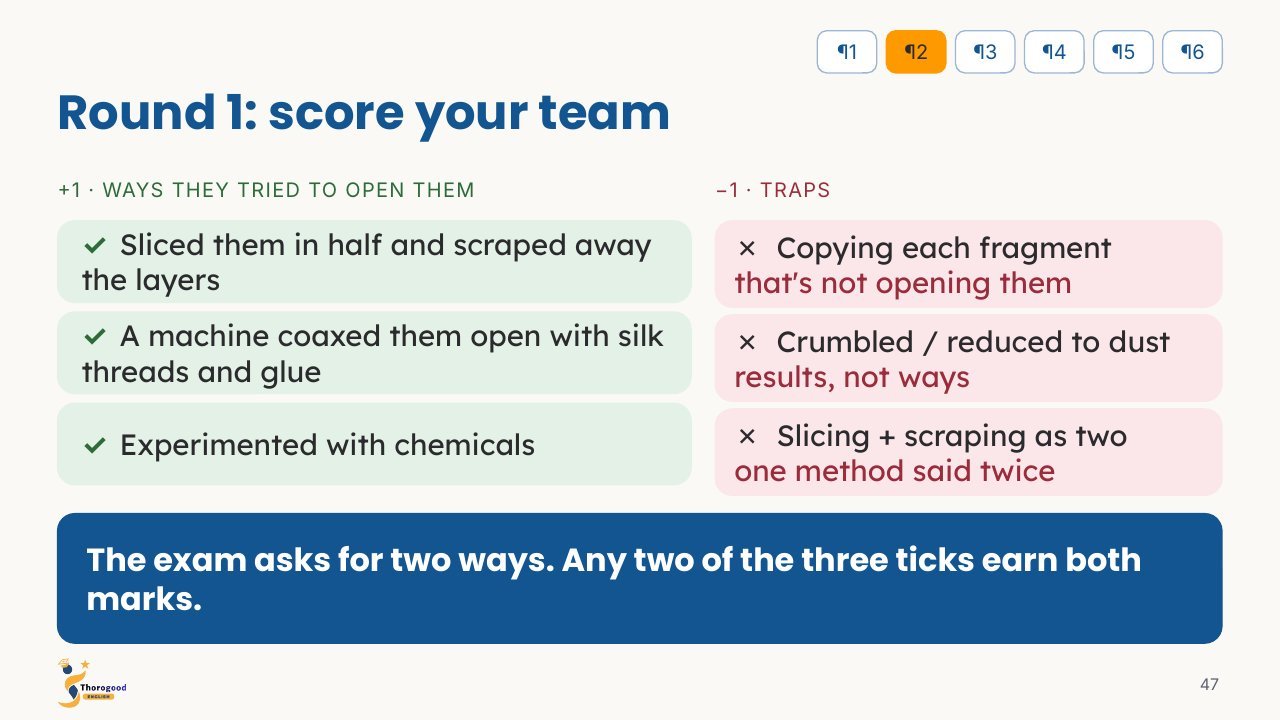
- Count It and Find It (1(a), (c), (d)): reading the marks to know how many points to give, going straight to the right paragraph, and avoiding the traps that cost marks on “give two” questions
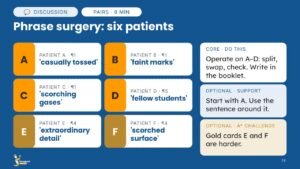
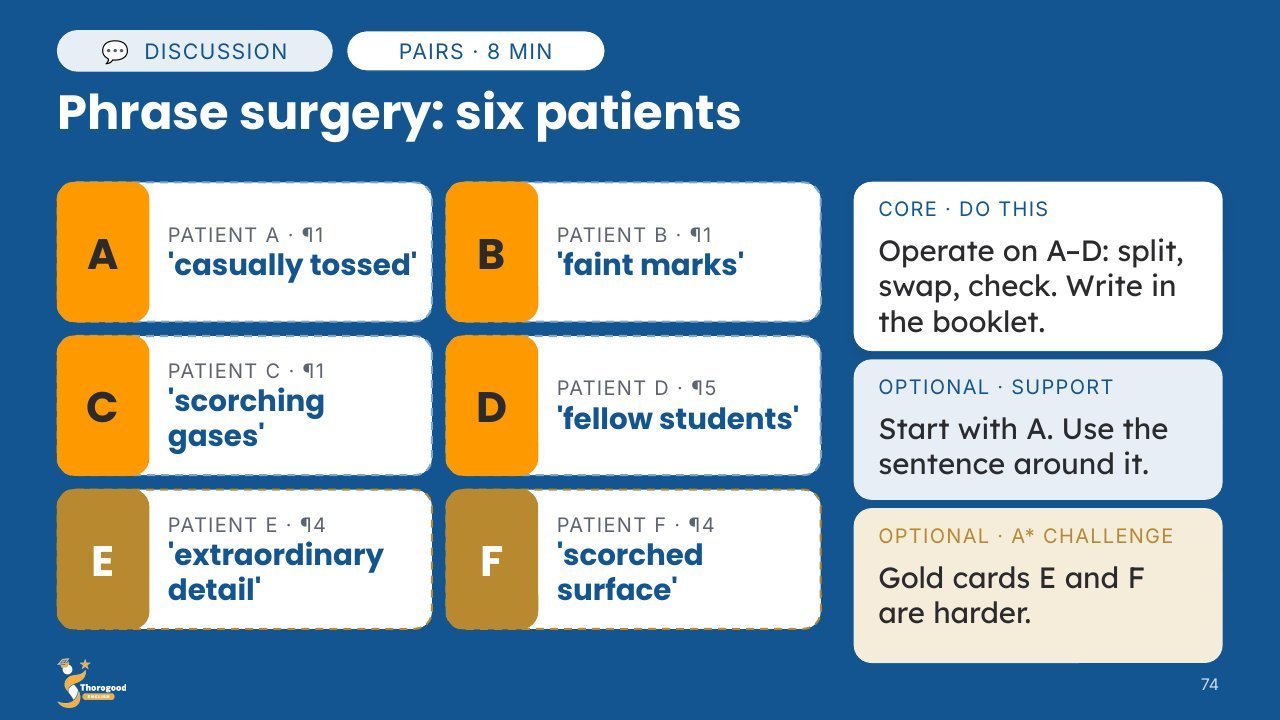
- Both Halves (1(b)): splitting a phrase in two and explaining each half in your own words, with “phrase surgery” and a chance to mark real answers as the examiner
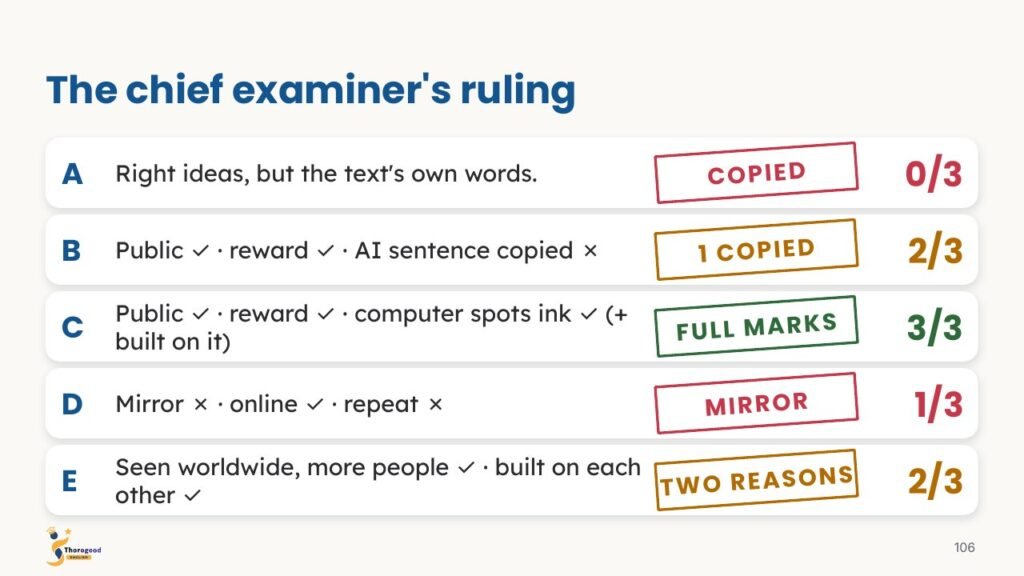
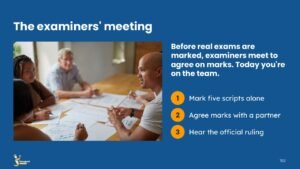
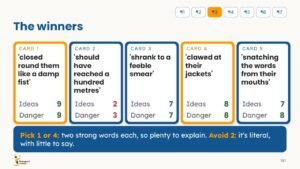
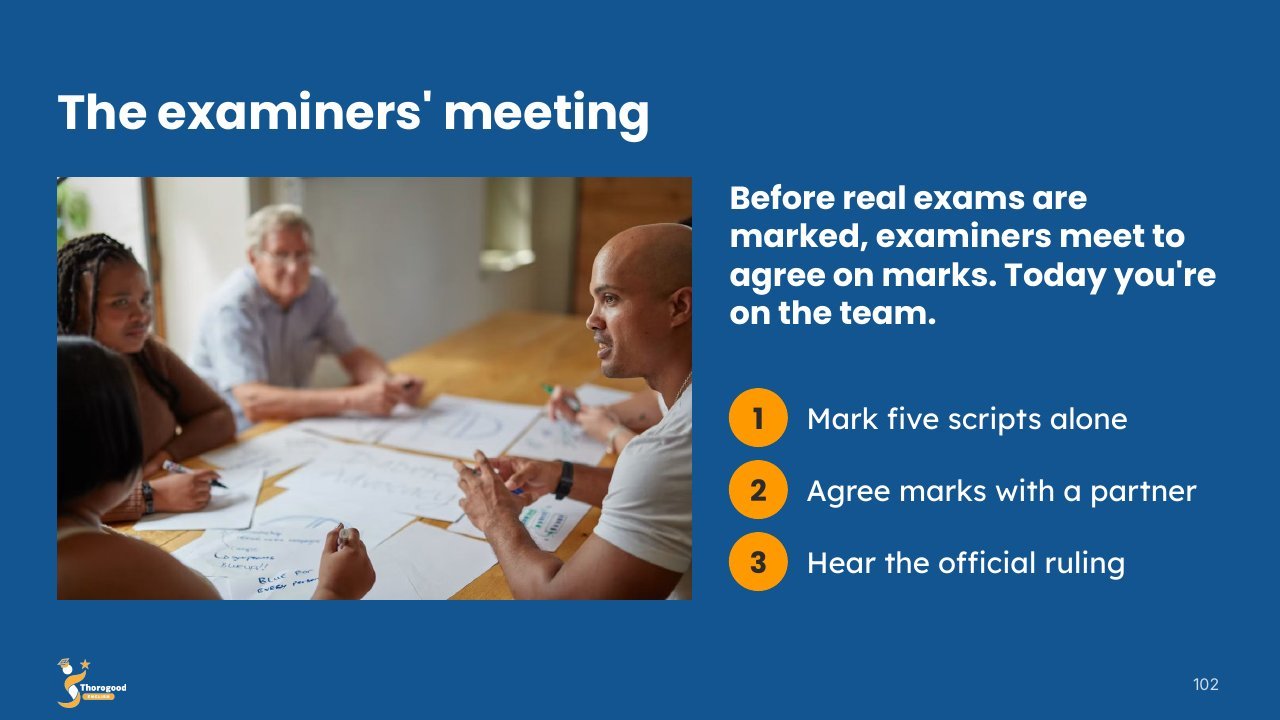
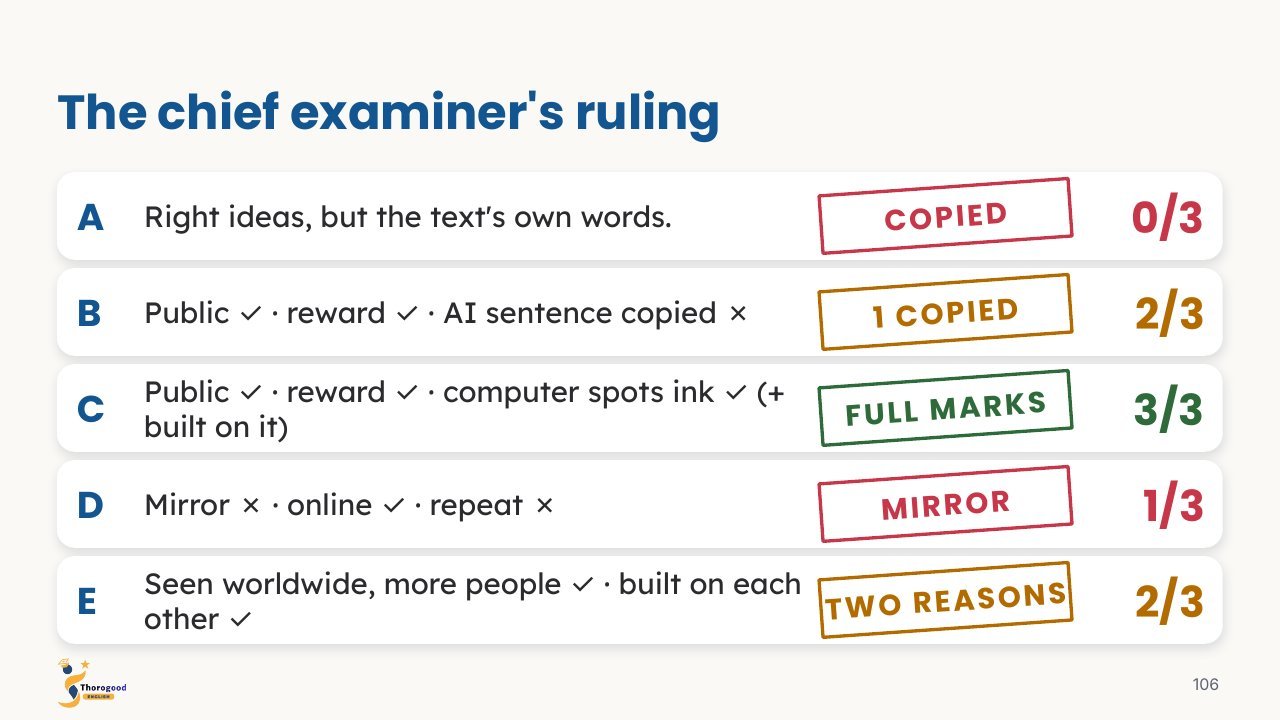
- Explain Why (1(e)): three separate reasons for three marks, and how to say them in your own words, with an examiners’ meeting where students agree marks on five scripts
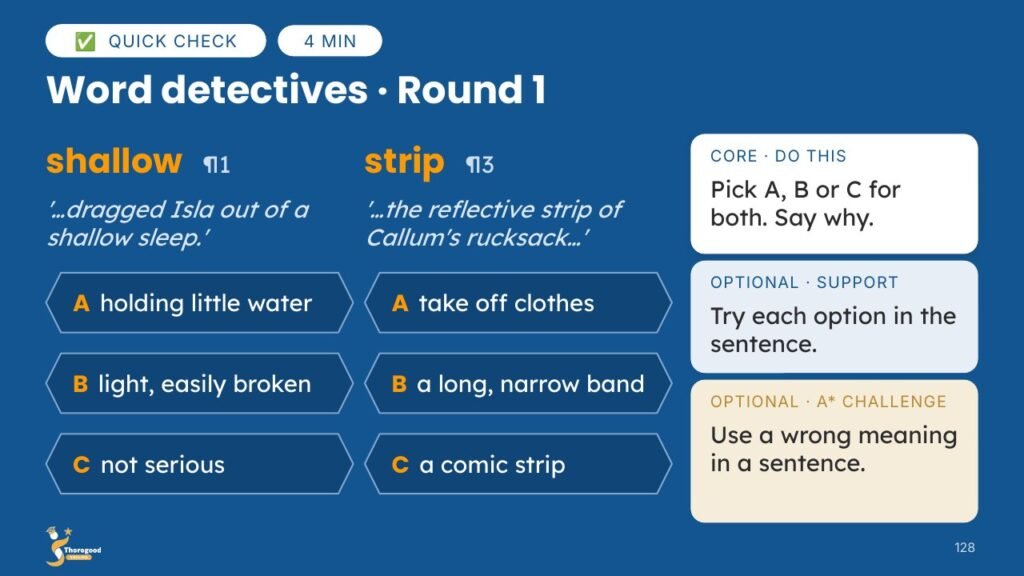
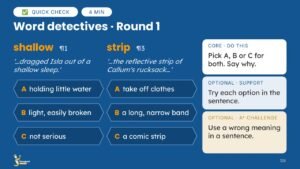
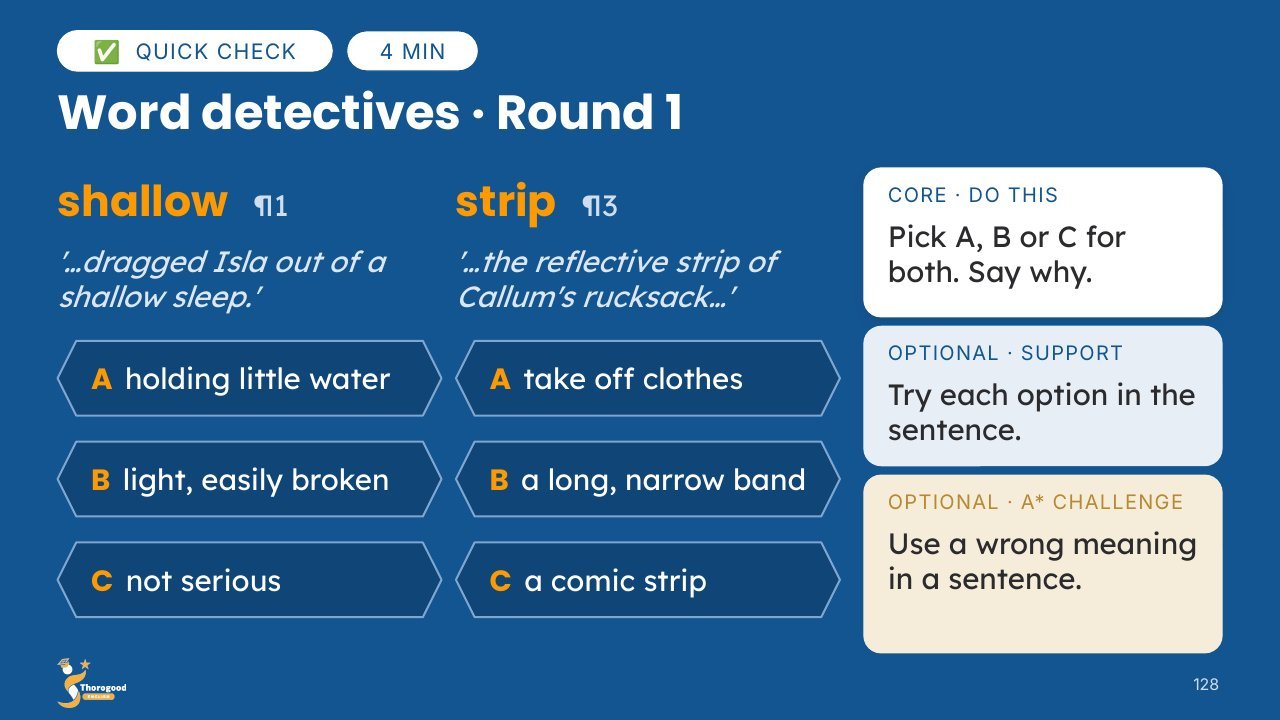
- Words Both Ways (3(a) and 3(b)): finding the exact word that matches a meaning, and explaining what a word means in this sentence rather than its everyday meaning, with three rounds of word detectives
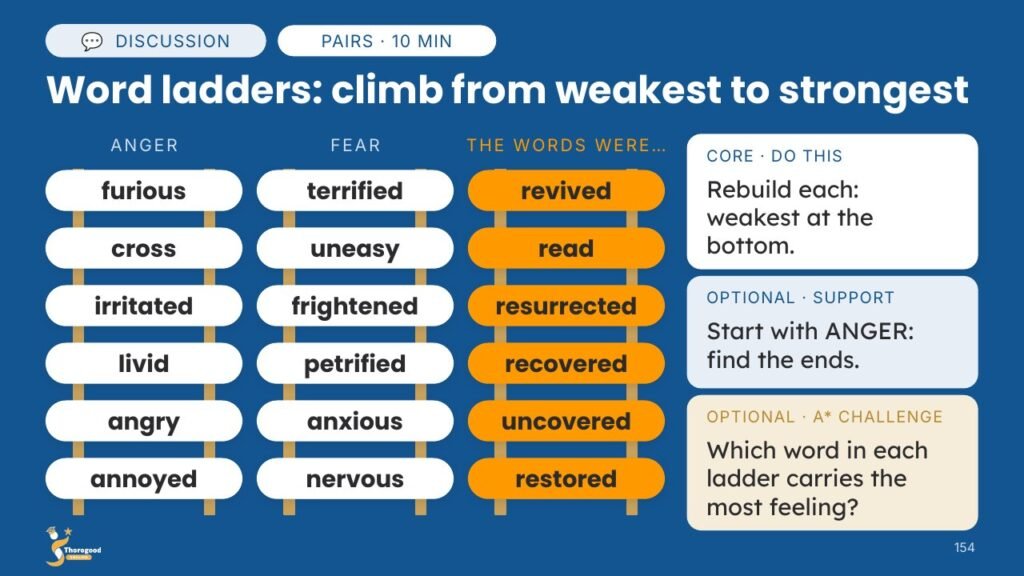
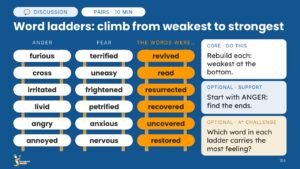
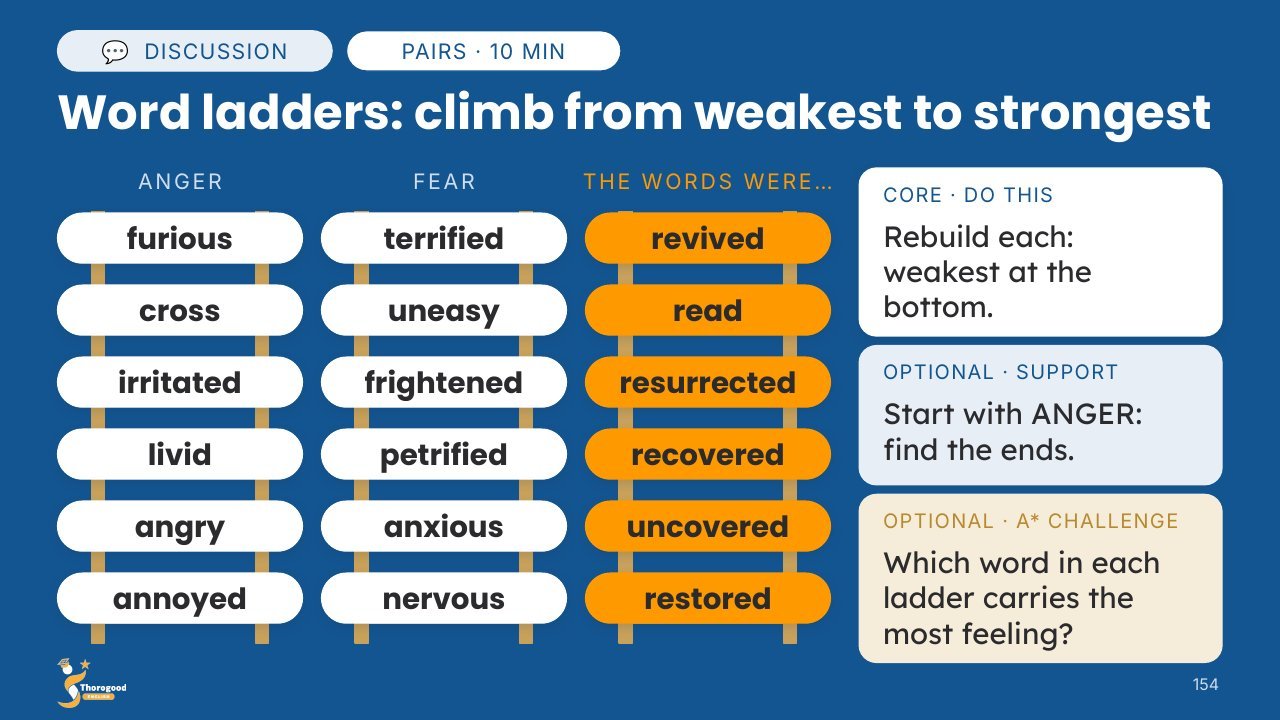
- Why This Word? (1(f)): why a writer chose one word rather than another, ranking words by strength and feeling on word ladders, and zooming in on every part of a phrase
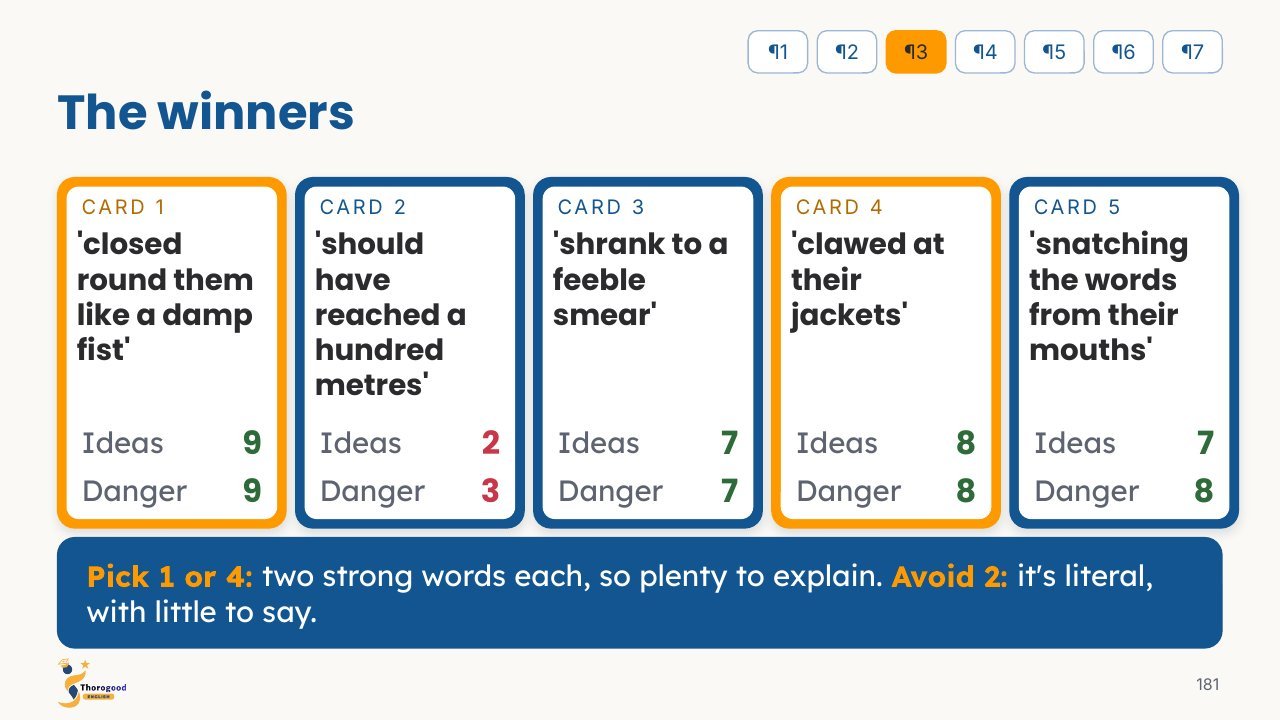
- One Example, Five Marks (3(c)): choosing the example that gives you the most to say, then building a Level 3 answer layer by layer with SHINE
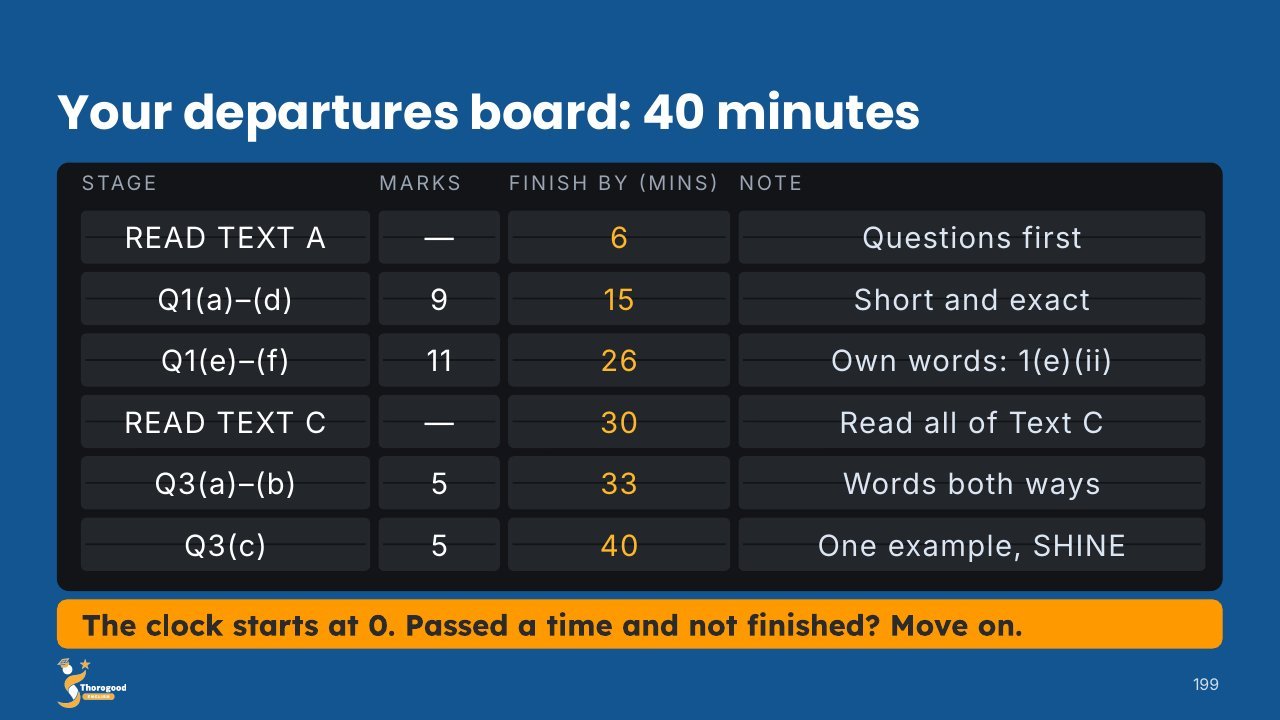
- The Final Test: Question 1 and 3(a)–(c) on two unseen texts in 40 minutes, marked like an examiner, then a then-and-now scoreboard and top tips for next year’s class
Written for students aged 14–16 and pitched to support weaker readers while stretching students aiming for an A*. It works in the classroom, for one-to-one tutoring, online, or for independent study at home.
What’s inside?
Lesson slides with eight full lessons:
The student booklet, the final test paper and the teacher mark scheme:
Made by Jacqueline Thorogood
An experienced, qualified English teacher with twenty-six years in the classroom, specialising in Cambridge IGCSE. More about me
Product Information
Availability:
In Stock
Price:
£12.00
- Secure checkout
- Instant access after checkout
Buying for your whole department?
A department licence covers every English teacher at your school, paid by invoice (purchase orders welcome).
Department price for this resource:
See school licences →Related products
-
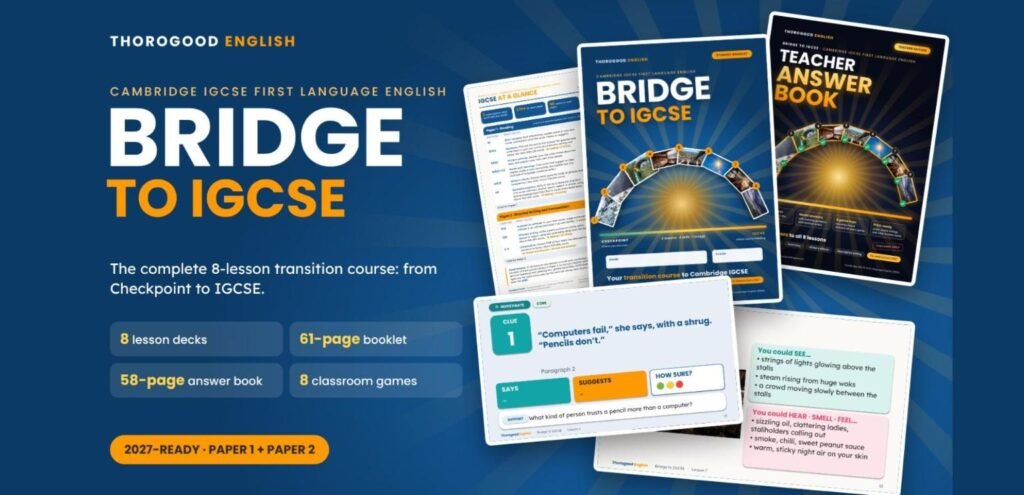
Bridge to IGCSE: The Complete Transition Course — Paper 1 and Paper 2 — IGCSE First Language English
Original price was: £25.00.£20.00Current price is: £20.00. -
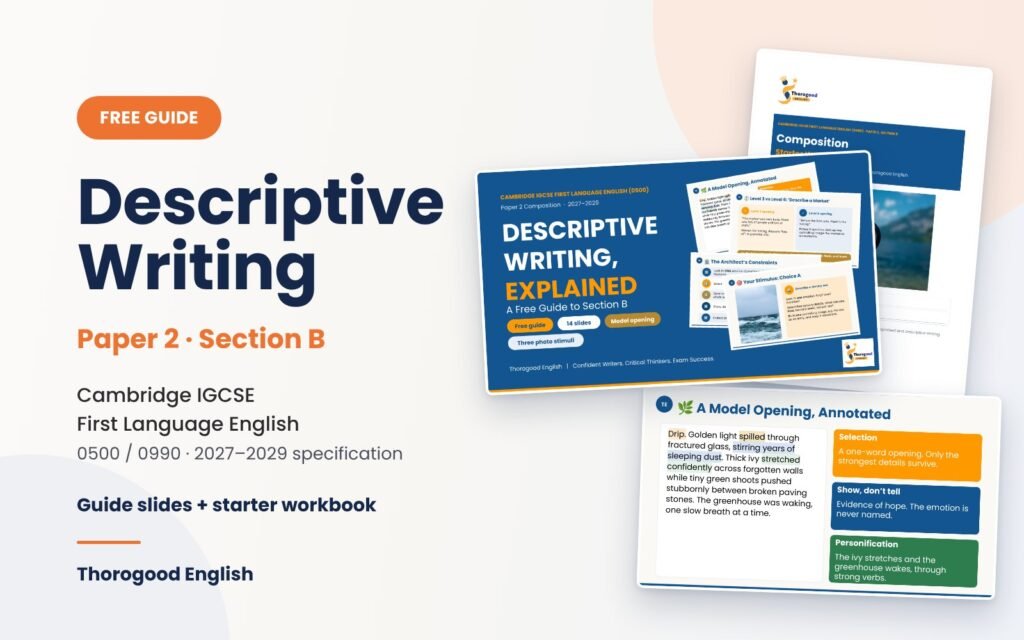
Descriptive Writing — Paper 2 for IGCSE First Language English
£0.00 -
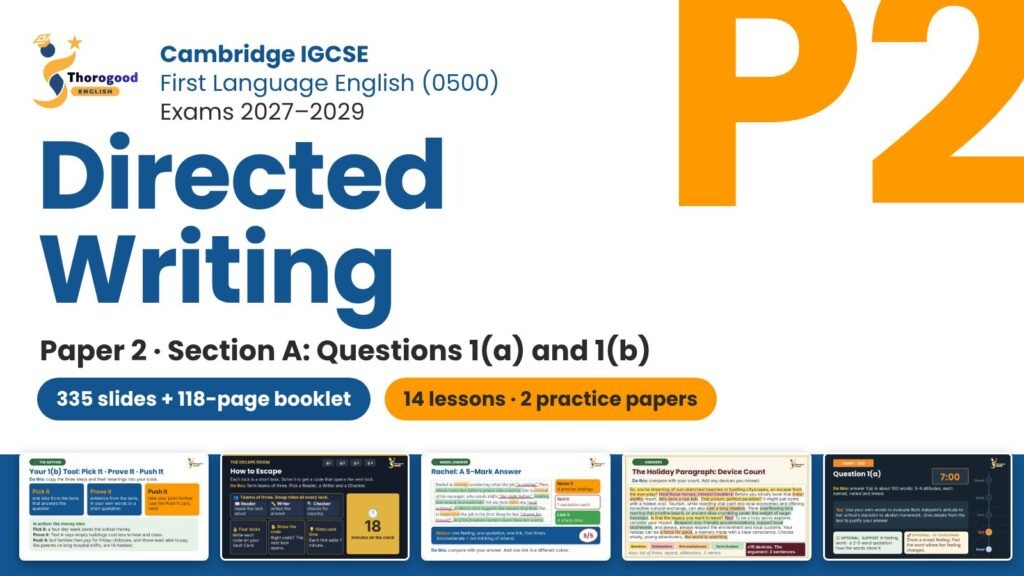
Directed Writing: Full Unit — Paper 2 Section A — IGCSE First Language English
£28.00 -
Directed Writing: The Price of a Grade — Paper 2 for IGCSE First Language English
£0.00 -
Extended Reading — Paper 1 for IGCSE First Language English
£0.00