Structure That Scores – Descriptive Writing Lesson (Real 38/40 Model)
Look insideUse the arrows or thumbnails to see real pages from this resource.






Description
Structure That Scores – Descriptive Writing Lesson & Student Booklet (IGCSE First Language English 0500, 2027–2029)
Many students write vivid sentences – then arrange them as a static list. Examiners reward descriptions that are shaped: writing that moves, develops and builds to an ending. This complete lesson teaches 16-year-olds how to structure a descriptive composition for Paper 2 so that it does exactly that.
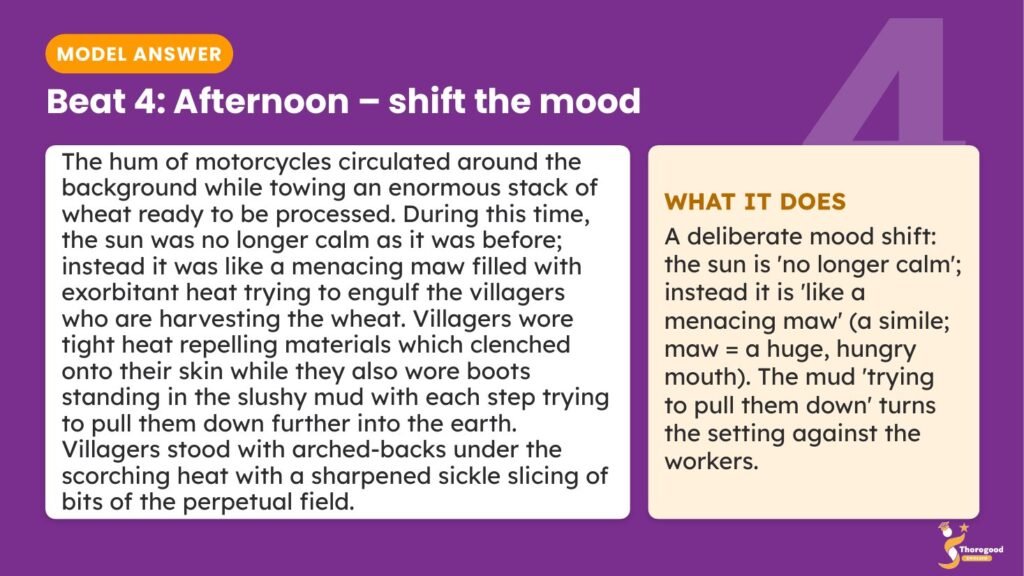
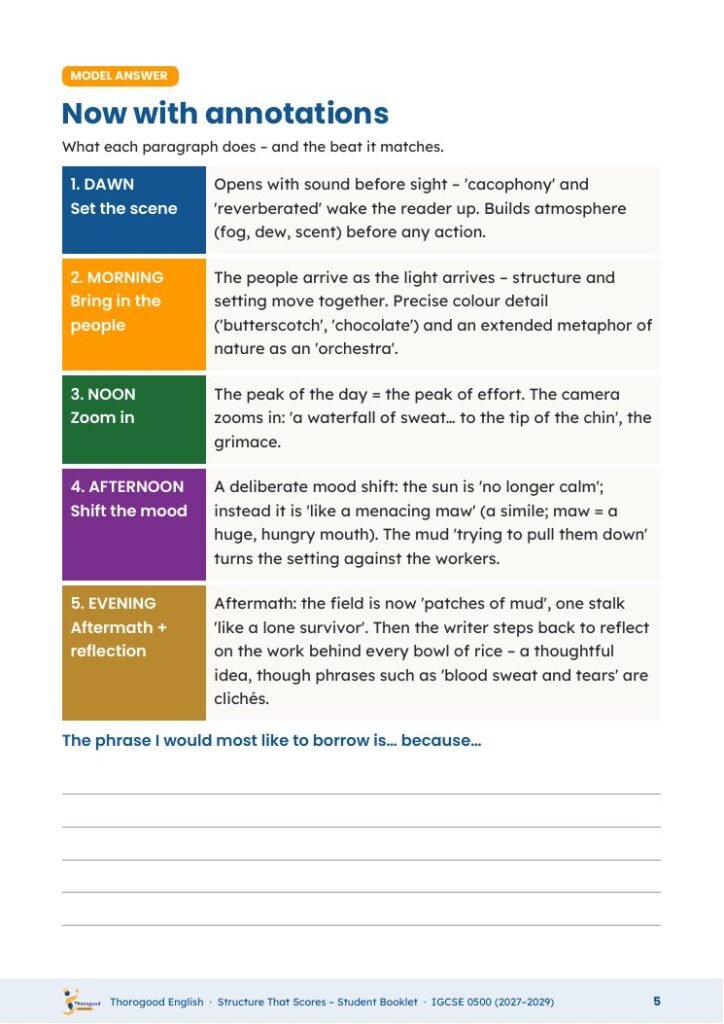
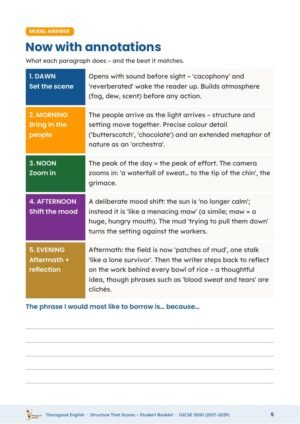
It is built around something students rarely get to see: a real student answer awarded 38/40 for the task “Describe people picking fruit or harvesting a crop.” Students read it clean and comment on it themselves, then see it fully annotated paragraph by paragraph – and then work out honestly what kept it from full marks.
What students learn
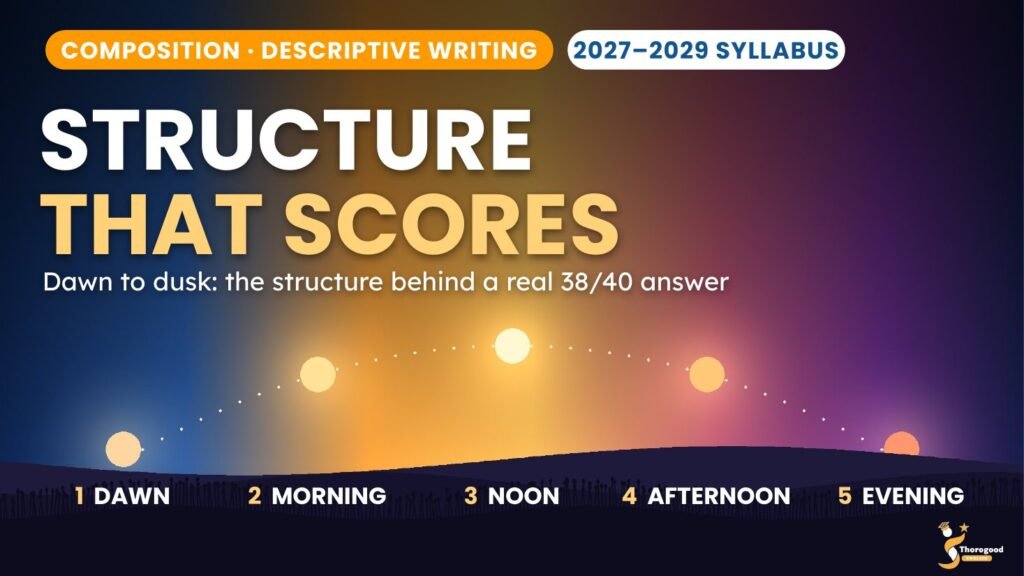
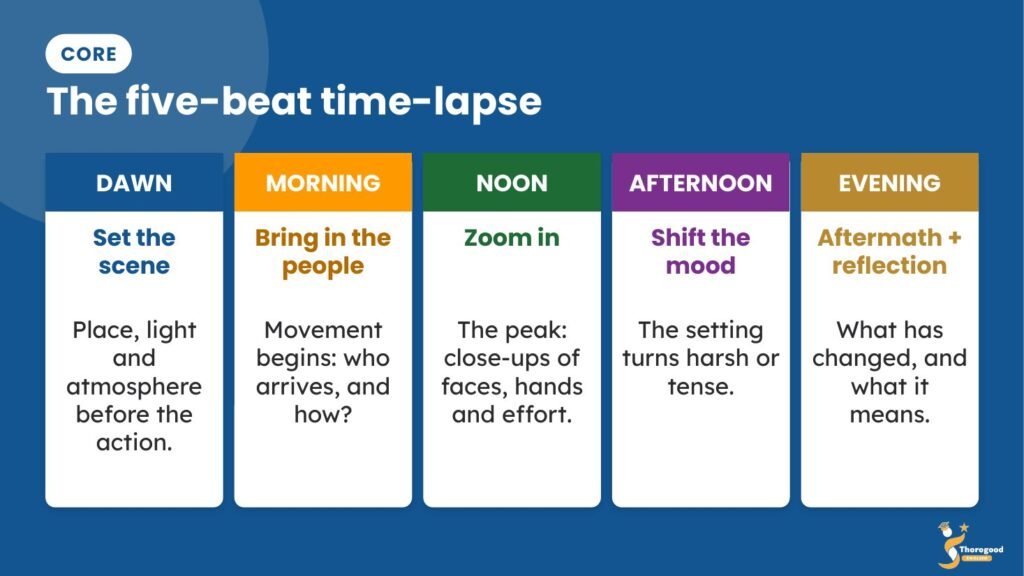
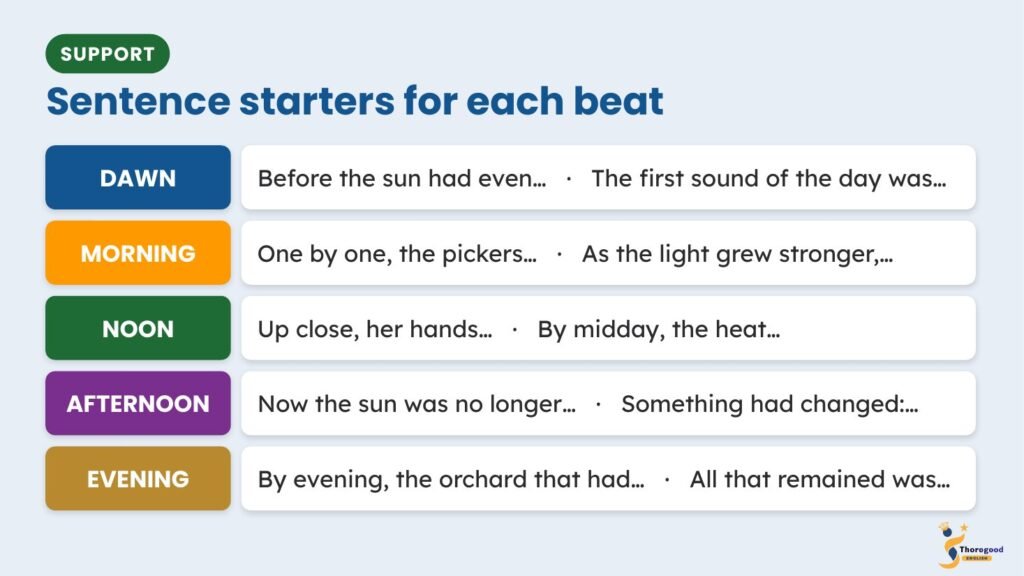
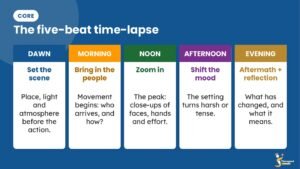
- The five-beat time-lapse – dawn (set the scene), morning (bring in the people), noon (zoom in), afternoon (shift the mood), evening (aftermath and reflection)
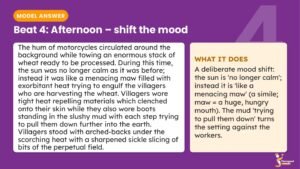
- Three more structure tools – zoom (wide, medium, close-up), mood shift and the echo ending
- What makes it 38, not 40? – the small, fixable slips that cost marks, so students learn to check their own work
Students then plan and write their own description of fruit pickers in an orchard. The structure is one flexible option that suits many descriptive tasks where a place changes over time – a market, a beach, a festival.
What’s included
- 43-slide lesson deck (PowerPoint) with detailed teacher notes under every slide and a suggested 75-minute lesson shape
- 15-page student booklet (PDF) that matches the deck page by page, with planning grid and writing space
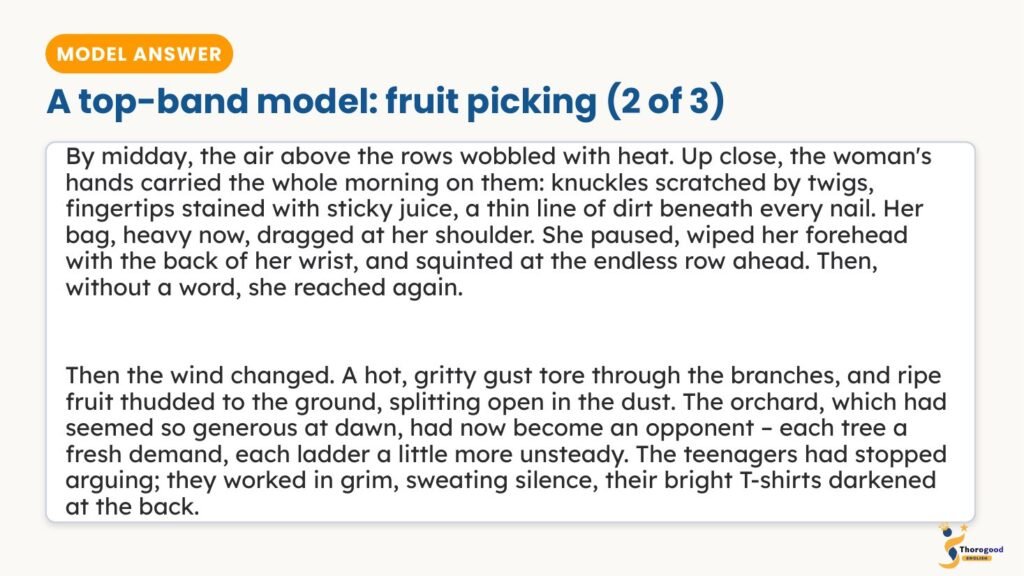
- Two model answers – the real 38/40 answer and a teacher-written top-band model – each shown clean, then annotated
- Support, core and challenge tasks clearly labelled throughout
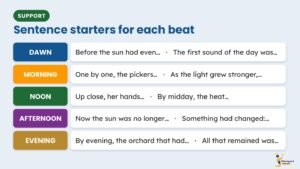
- Sentence starters and one-sentence models for every beat
- Two ambitious vocabulary banks with meanings
- Formative assessment – a quick quiz, a self and partner checklist and an exit ticket
- All answers included – on the slides and on the booklet’s answer page
Who it’s for
Teachers, tutors and students preparing for Cambridge IGCSE First Language English (0500) Paper 2 Composition, 2027–2029 syllabus. Ideal for Year 10 and Year 11, for whole-class teaching or independent study.
The 38/40 answer is a real student response, reproduced with permission. Names have been removed.
Price:
£3.00
- Secure checkout
- Instant access after checkout
Buying for your whole department?
A department licence covers every English teacher at your school, paid by invoice (purchase orders welcome).
Department price for this resource:
See school licences →Related products
-
Annotated Model Compositions – Lesson & Booklet (Includes a Real Student Story)
£3.00 -
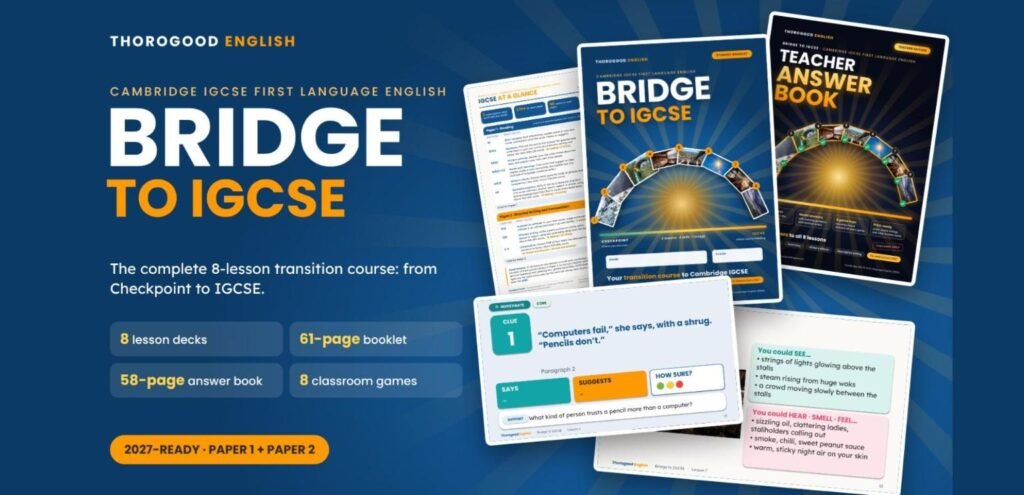
Bridge to IGCSE: The Complete Transition Course — Paper 1 and Paper 2 — IGCSE First Language English
Original price was: £25.00.£20.00Current price is: £20.00. -
Directed Writing: Full Unit — Paper 2 Section A — IGCSE First Language English
£28.00 -
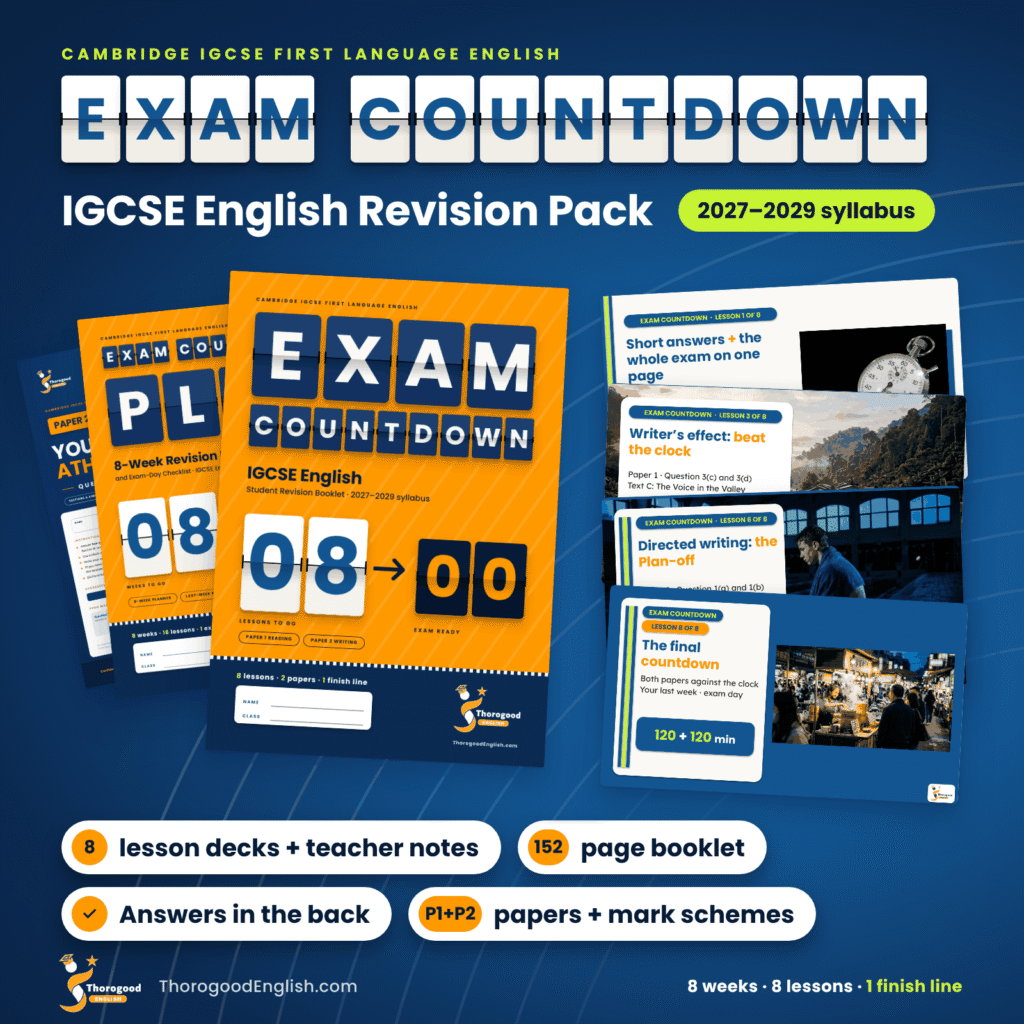
Exam Countdown: IGCSE English Revision Pack (2027–2029 syllabus)
Original price was: £25.00.£20.00Current price is: £20.00. -
Extended Reading 2027: Full Unit — Paper 1 Question 4 — IGCSE First Language English
£25.00